


Skill assessment has transformed companies' hiring practices in 2025. A LinkedIn study reveals that 92% of talent professionals consider soft skills equally or more valuable than hard skills. The workplace's continuous progress has sparked a radical alteration in what truly predicts job success.
Research from Deloitte shows that companies prioritizing skills over degrees have gained a measurable competitive edge through better agility and resilience. Understanding this transformation becomes significant whether you need to implement job skill assessment tests, create employee assessment programs, or choose the right assessment tools. Organizations embracing skills-first hiring discover better candidates and build dynamic internal mobility systems that boost employee retention.
Companies that confirm skills properly create a level playing field for candidates and achieve better hiring outcomes. Recent survey data shows a 68% improvement in quality and a 62% reduction in bias with assessment use. This piece explores skill assessment's advantages over traditional credentials, real predictors of job success, and practical strategies to implement skill assessment in your organization.
The Shift from Credentials to Skills in Hiring
Traditional hiring methods that depend on degrees and credentials don't work well anymore in today's ever-changing work environment. Companies that screen candidates based on degrees leave out more than half of the U.S. workforce. This creates needless barriers for qualified candidates. The focus on resumes often shows an unrealistic picture that misses the most important traits like resilience and knowing how to solve problems. About 74% of organizations admit they hired the wrong person when they used old-school methods. These approaches fail both employers and candidates.
The 2025 job market needs a completely different approach. Workers should expect 39% of their existing skill sets to change or become outdated between 2025-2030. The world needs massive workforce upskilling—if we had 100 workers worldwide, 59 would need training by 2030. Employers see skill gaps as their biggest roadblock to business growth, with 63% calling it a major challenge. This reality has pushed 85% of employers to make upskilling their teams a priority.
Skills-first hiring models are taking off quickly to address these challenges. Dell, Accenture, IBM, and Amazon lead this revolution. The numbers tell the story—companies that use skills-based approaches are 107% more likely to place talent effectively and 98% better at keeping top performers. These companies also make 90% fewer hiring mistakes when they focus on skills instead of credentials. Job simulations and skill tests work really well because they show how candidates might perform in real life. While this transformation continues, progress varies—46% of middle-skill job postings needed fewer degree requirements between 2017-2019, but many companies still find it hard to turn their plans into action.
Credentials vs. Skill Assessment: What Really Matters
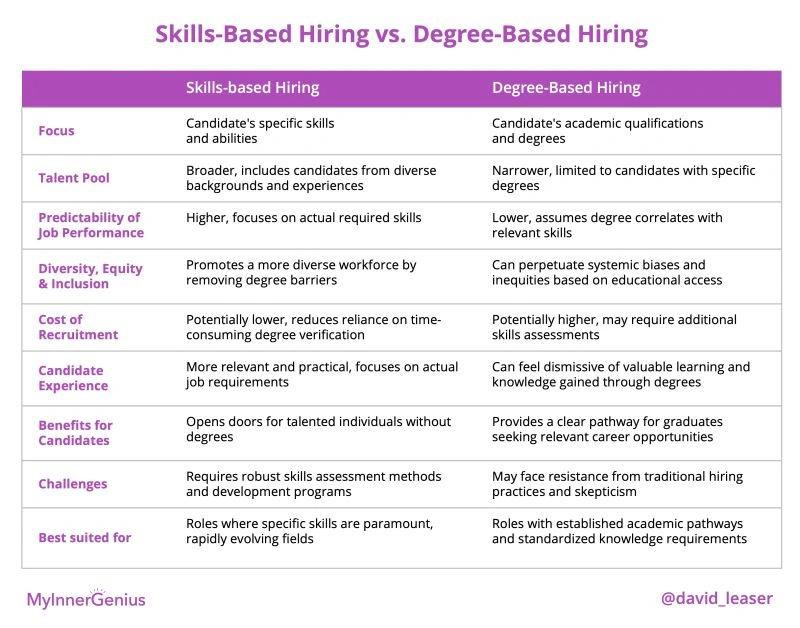
Credentials have long been the gatekeepers in hiring, but their ability to predict job success needs a closer look.
What credentials actually measure
Degrees and certifications from recognized organizations serve as proof of academic achievement. They show someone can stick with and complete long-term projects. Degrees and certificates also give employers a quick way to filter job candidates, thanks to their perceived credibility.
Limitations of degree-based hiring
Degree-based hiring comes with significant drawbacks. This method leaves out talented people who lack formal education. It creates a "paper ceiling" that blocks career growth for those without degrees. Recent studies show a college degree becomes less relevant as jobs need constant skill updates.
How skill assessment tests reveal real capabilities
Skill assessments provide a scientific method to check if candidates' abilities match job needs. These tests give practical insights into what someone can really do, unlike resumes that might stretch the truth. They help find hidden talent that degrees might overlook.
Soft skills vs. hard skills: which are more predictive?
The largest longitudinal study by Harvard University and Carnegie Foundation revealed that soft skills drive 85% of job success, while technical skills account for just 15%. People who excel at communication, teamwork, and problem-solving thrive in their jobs. Research also shows that emotional intelligence determines 58% of job performance in any discipline.
Tools and Methods for Validating Skills
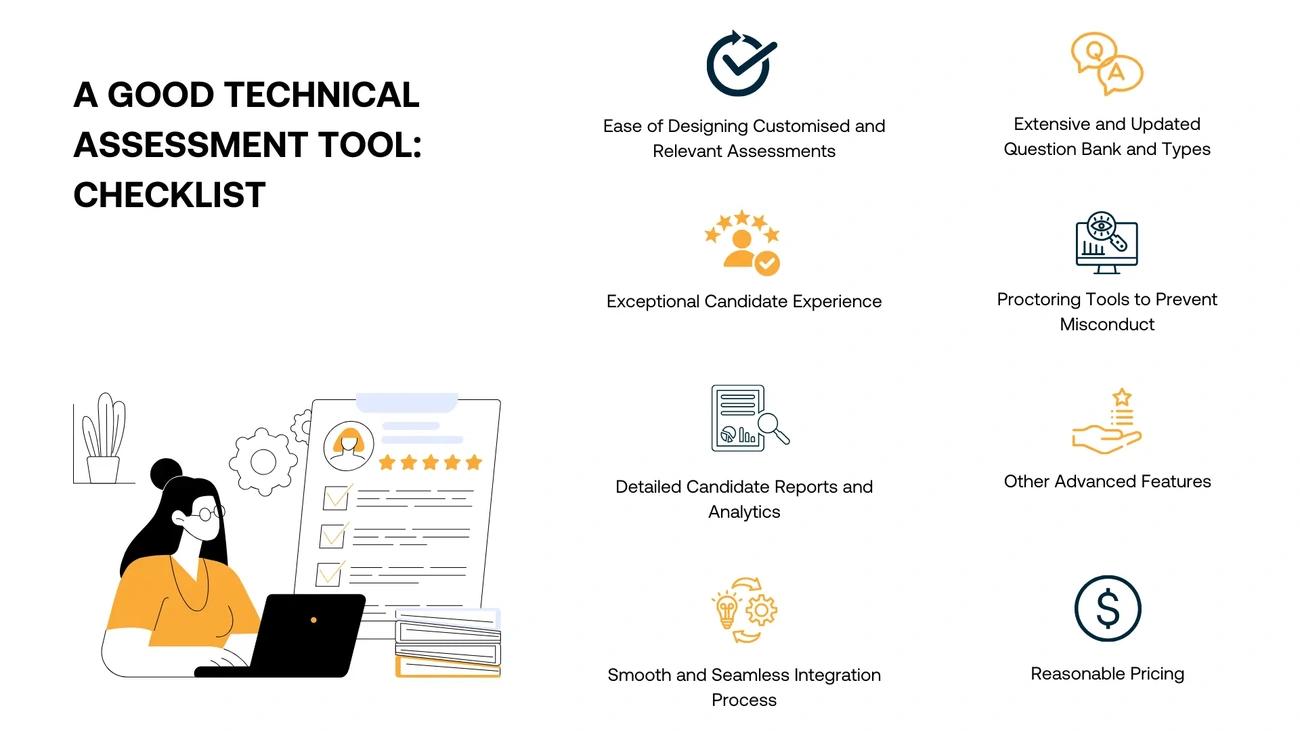
The right tools and methodologies play a crucial role in accurately assessing candidate capabilities.
Hands-on assessments vs. structured interviews
Research shows structured interviews are better predictors of job performance than unstructured approaches. Google's research reveals that interviewers save 40 minutes on average per interview with structured formats. Rejected candidates also report a 35% better experience.
Using job skill assessment tests and simulations
Job simulations help review practical abilities through role-specific tasks. Work sample tests prove to be excellent predictors of job performance. These tests include coding challenges for developers and situation-based exercises that measure cognitive ability, problem-solving skills and adaptability.
Digital tools: AI-driven platforms and gamified tests
Today's assessment platforms offer:
- AI-powered scoring and evaluation systems
- Test Partnership's MindmetriQ gamified assessments that complete in 4-6 minutes
- Integrated development environments for coding tests
- Multi-language support that caters to diverse candidate pools
Skill assessment templates for consistent evaluation
Standardized templates create structured formats that match capabilities with role-specific requirements. These templates reduce hiring bias and ensure fair candidate assessment. A well-designed template identifies specific skill gaps and shapes targeted training initiatives.
The value of portfolios and work samples
Portfolios give interviewers tangible evidence of a candidate's best professional work. Creative fields like art, design, publishing, and tech benefit greatly from portfolios. Candidates should include varied samples that demonstrate their range of skills and customize portfolios for specific job applications.
Benefits of Skills-Based Hiring for Employers and Candidates
Skills-based hiring creates measurable benefits that add value throughout the talent lifecycle for organizations and job seekers alike.
Improved job fit and reduced turnover
Organizations that use skills-based hiring see a remarkable 39% lower turnover rate compared to traditional methods. Employees stay 9% longer with companies because their capabilities match actual job requirements. The financial benefits are clear - replacing an employee costs between 30-150% of their annual salary. Companies using Workday's skills-based approach have seen an 11% rise in offer acceptance rates. This proves that candidates quickly spot positions matching their abilities.
Faster hiring with skill assessment tools
Skill assessment platforms make recruitment faster and more efficient. Companies cut their time-to-hire by 32% with skills-based methods. Automated tools reduce the cost per interview by 50%, which leads to major operational savings. The candidate experience gets better too. These platforms achieve 92% satisfaction rates and boost candidate responses by 15%.
More inclusive and diverse talent pipelines
Skills-focused hiring opens doors to broader talent pools:
- Organizations can tap into talent pools 10 times larger than degree-based screening
- The U.S. has over 70 million STARs (Skilled Through Alternative Routes) workers ready for higher-wage work
- Unilever boosted entry-level diversity by 16% after dropping resume screens
Encouraging continuous learning and upskilling
Learning opportunities matter to 72% of employees at work. Companies that embrace skills-based approaches show 57% more business agility and achieve results 63% more often than those using traditional practices. Skills development becomes crucial as 39% of current skillsets will become outdated between 2025-2030. This makes ongoing skill development essential for lasting success.
Comparison Table
| Aspect | Traditional Credentials-Based Hiring | Skills-Based Assessment Hiring |
|---|---|---|
| Hiring Accuracy | 74% wrong hire rate | 90% fewer hiring mistakes |
| Talent Placement | Used as baseline | 107% more likely to place talent effectively |
| Employee Retention | Used as baseline | 98% more likely to retain high performers |
| Turnover Rate | Used as baseline | 39% lower turnover rate |
| Talent Pool Access | Excludes over 50% of U.S. workforce | Access to 10× larger talent pools |
| Predictive Power | Primarily measures academic achievement | 85% job success prediction (soft skills) + 15% (technical skills) |
| Hiring Speed | Used as baseline | 32% decrease in time-to-hire |
| Interview Costs | Used as baseline | 50% reduction in cost per interview |
| Candidate Experience | Used as baseline | 92% candidate satisfaction rate |
| Bias Reduction | Used as baseline | 62% reduction in bias |
| Quality of Hire | Used as baseline | 68% improvement in quality |
| Offer Acceptance | Used as baseline | 11% increase in offer acceptance rates |
Conclusion
Skill assessment beats traditional credentials in predicting job success. Companies that hire based on skills see amazing results—107% better talent placement, 39% lower turnover, and 90% fewer hiring mistakes. These numbers paint a clear picture of the changes reshaping the scene across industries.
Traditional credential-based hiring creates barriers that shut out qualified candidates who lack formal education. Companies requiring degrees automatically cut off more than half their potential talent pool and limit their access to skilled workers.
Tests that measure skills, especially soft skills, better predict how someone will perform on the job. Harvard University's research backs this up—85% of job success comes from soft skills, while technical knowledge makes up just 15%. This stark difference shows why industry leaders like Dell, Accenture, IBM, and Amazon lead the skills-first movement.
The fast-changing workplace makes skill assessment crucial. Workers' existing skills will become 39% outdated between 2025-2030, which makes ongoing skill development a must. Companies that use skills-based hiring gain a clear edge in adaptability and business agility.
Tomorrow's successful companies will test skills through well-laid-out interviews, job simulations, AI-driven platforms, and standardized assessment templates. These tools create better hiring outcomes and more diverse workplaces. More organizations now see the limits of credential-based hiring, and skill assessment will become the go-to method to find capable candidates who excel in tomorrow's workplace.
Key Takeaways
Skills-based hiring is transforming recruitment in 2025, delivering measurable improvements in talent acquisition and employee retention while creating more inclusive workplaces.
• Skills predict success better than degrees: 85% of job success comes from soft skills, while technical knowledge accounts for only 15% of performance outcomes.
• Skills-based hiring reduces costly mistakes: Companies experience 90% fewer hiring errors, 39% lower turnover, and 107% better talent placement compared to credential-focused approaches.
• Assessment tools accelerate hiring: Modern skill assessment platforms reduce time-to-hire by 32% and cut interview costs by 50% while maintaining 92% candidate satisfaction.
• Skills-first expands talent pools: Organizations gain access to talent pools 10 times larger than degree-based screening, removing barriers for over 50% of qualified workers.
• Continuous skill development is essential: With 39% of existing skills becoming outdated by 2030, companies must prioritize ongoing assessment and upskilling over static credentials.
The shift from credentials to skills isn't just a trend—it's a strategic necessity for organizations seeking competitive advantage in an rapidly evolving job market where adaptability and practical capabilities matter more than formal qualifications.