


Introduction: The Shift from Hard Skills to Human Skills
For decades, hiring in the tech world focused almost exclusively on coding skills, system knowledge, and technical expertise. But in 2025, things are changing fast. Emotional intelligence assessment—once considered “soft”—has become a core factor in recruitment strategies. EQ not only predicts leadership success and collaboration but also plays a direct role in retention and recruitment ROI.
In today’s workplace, where hybrid teams and automation dominate, emotional intelligence is no longer optional—it’s essential.
What Is an Emotional Intelligence Assessment?
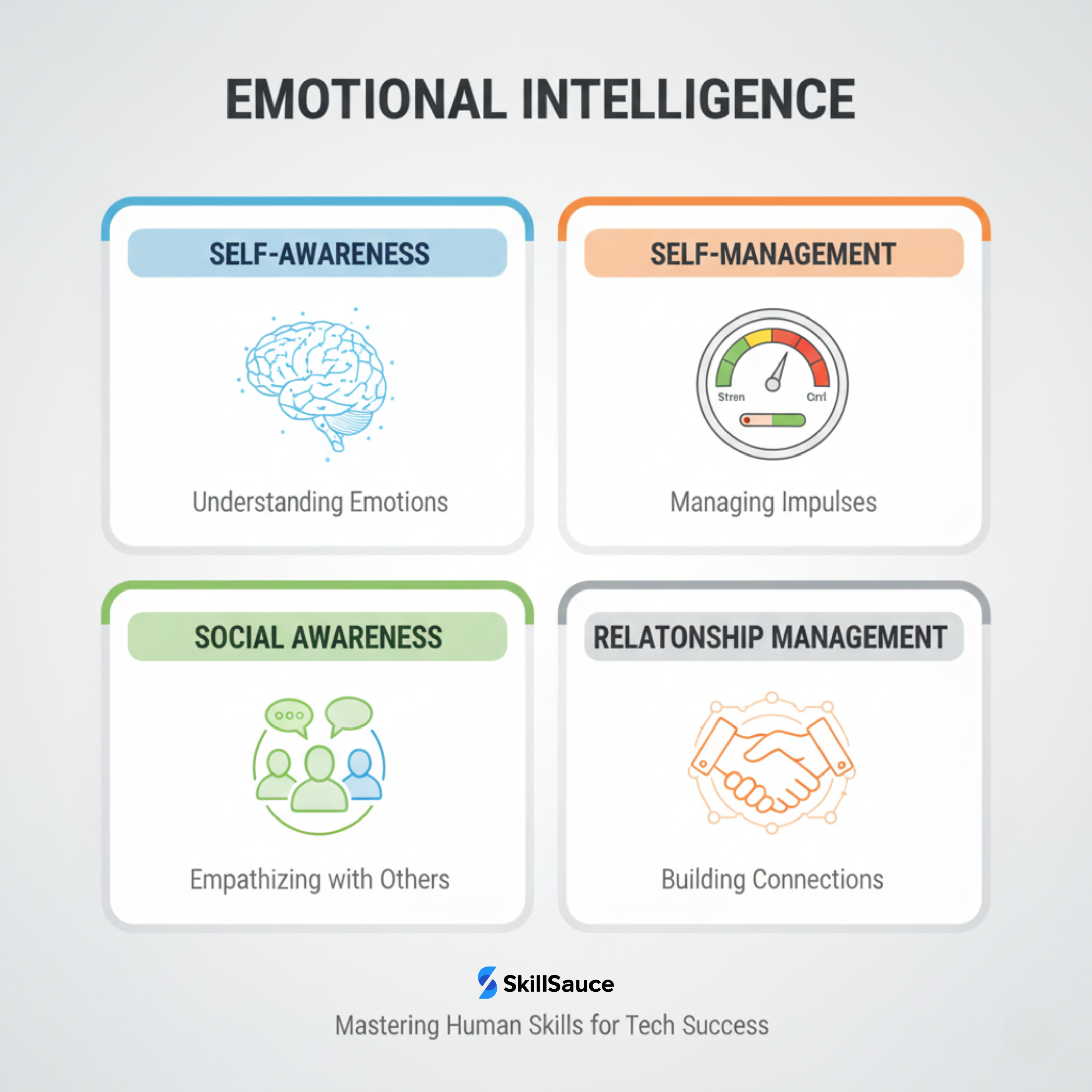
Emotional intelligence (EQ) measures four major areas:
- Self-awareness – recognizing one’s emotions and their impact.
- Self-management – controlling impulses, stress, and adaptability.
- Social awareness – empathy and understanding others’ perspectives.
- Relationship management – communication, teamwork, and conflict resolution.
An emotional intelligence assessment evaluates these competencies during the hiring process. For tech teams, this means spotting candidates who not only code efficiently but also lead effectively, collaborate well, and adapt to rapid changes.
Emotional Intelligence in Hiring: Current Trends (2024–2025)
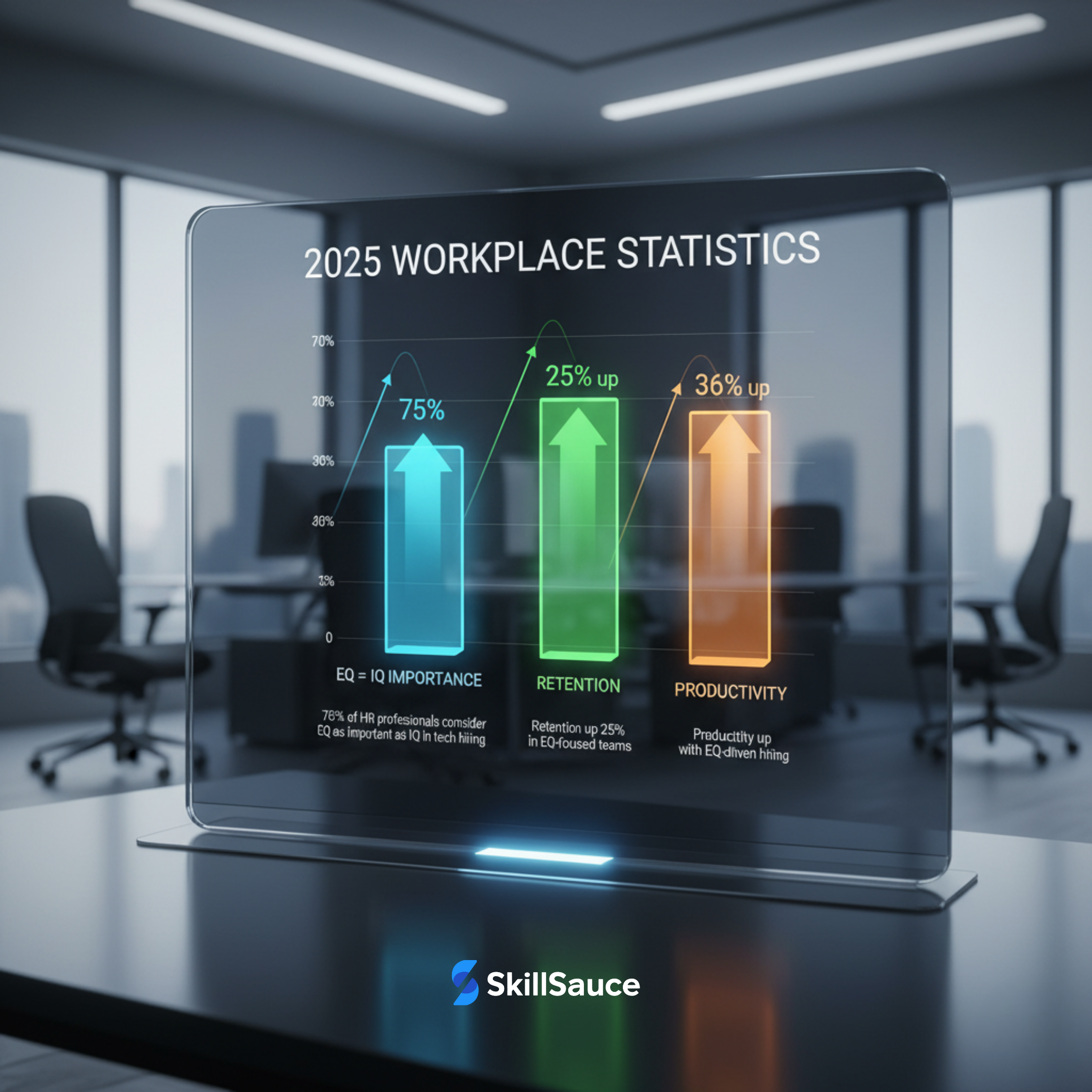
- 75% of HR professionals now consider EQ as important as IQ when hiring.
- 44% of organizations actively include emotional intelligence assessment in their recruitment process.
- EQ has consistently ranked in the top 10 in-demand skills and is projected to grow by 26% by 2030.
- 86% of HR leaders report better retention and higher-quality hires when EQ is part of the hiring strategy.
Why Emotional Intelligence Boosts Recruitment ROI
Companies that integrate EQ into their hiring process see measurable ROI:
- Retention: Tech teams with high EQ experience 20–25% higher retention.
- Productivity: EQ-driven organizations report 36% higher productivity.
- Efficiency: EQ-focused hiring doubles the interview-to-hire success ratio.
- Leadership Impact: Managers with high EQ retain 70% of employees for 5+ years.
This proves that emotional intelligence assessment is not just about “soft skills”—it directly impacts hiring efficiency, employee longevity, and overall organizational health.
Tools and Methods to Measure Emotional Intelligence
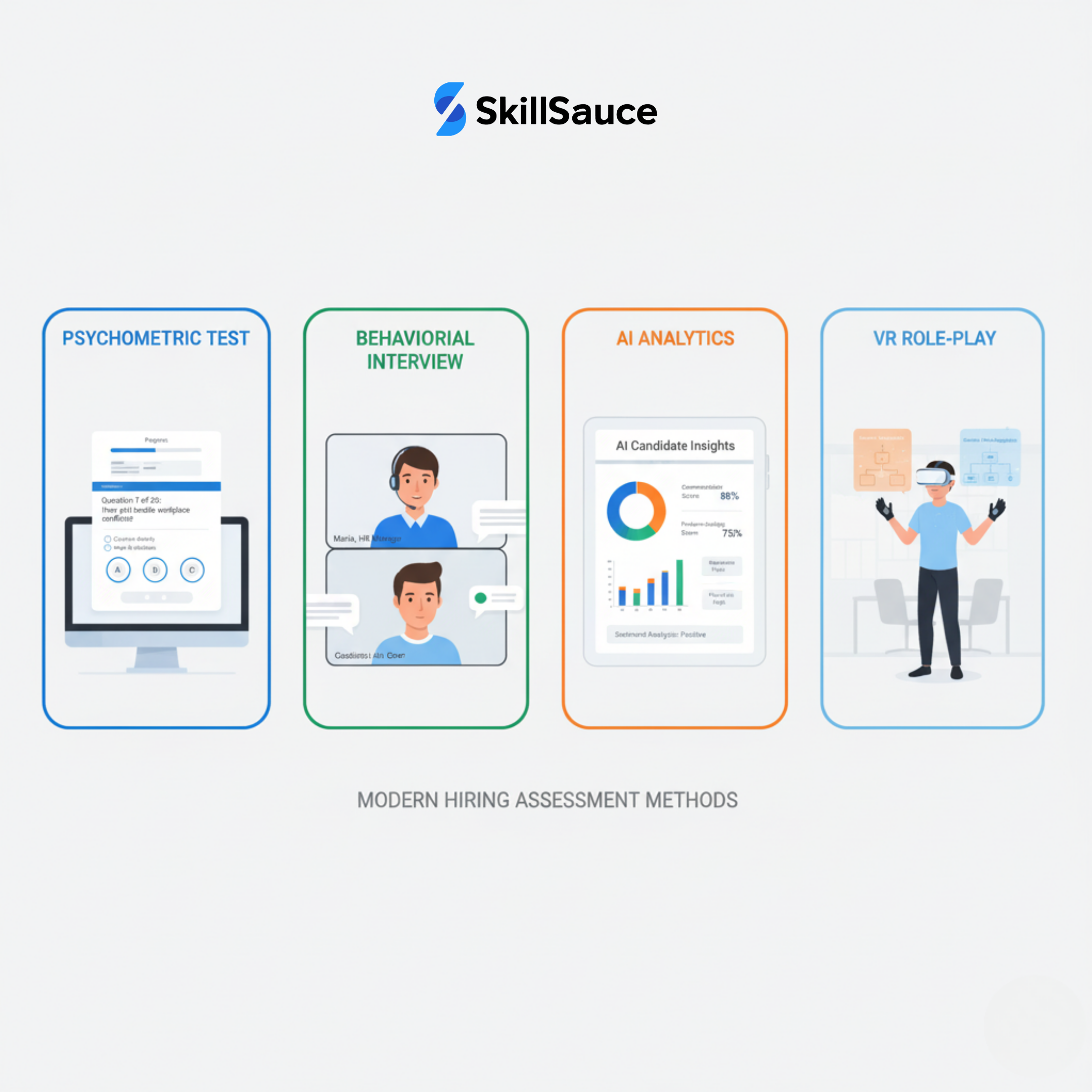
- Psychometric Tests
- EQ-i 2.0 and Mayer-Salovey-Caruso Emotional Intelligence Test measure self-awareness, empathy, and adaptability.
- Behavioral Interviews
- Focus on situational questions (e.g., handling conflict or stress).
- Scenario-Based Role Plays
- Real-world problem simulations to gauge emotional responses.
- Video and voice analytics to detect patterns in empathy, tone, and adaptability.
Case Studies: EQ in Action
- Google: Integrated EQ-focused interviews, leading to stronger team cohesion and faster delivery.
- SAP: EQ-based hiring raised high-potential candidate retention by 25% in just one year.
- Atlassian: EQ-driven assessments boosted cross-team collaboration and long-term retention.
These examples show how emotional intelligence assessment directly improves tech recruitment outcomes.
Challenges of EQ Assessment
While powerful, emotional intelligence testing isn’t flawless:
- Subjectivity and candidate “gaming” responses can skew results.
- Cultural bias may affect assessment accuracy.
- Overemphasizing EQ may risk sidelining essential technical skills.
This is why EQ should complement, not replace, technical evaluations.
The Future of EQ in Tech Recruitment
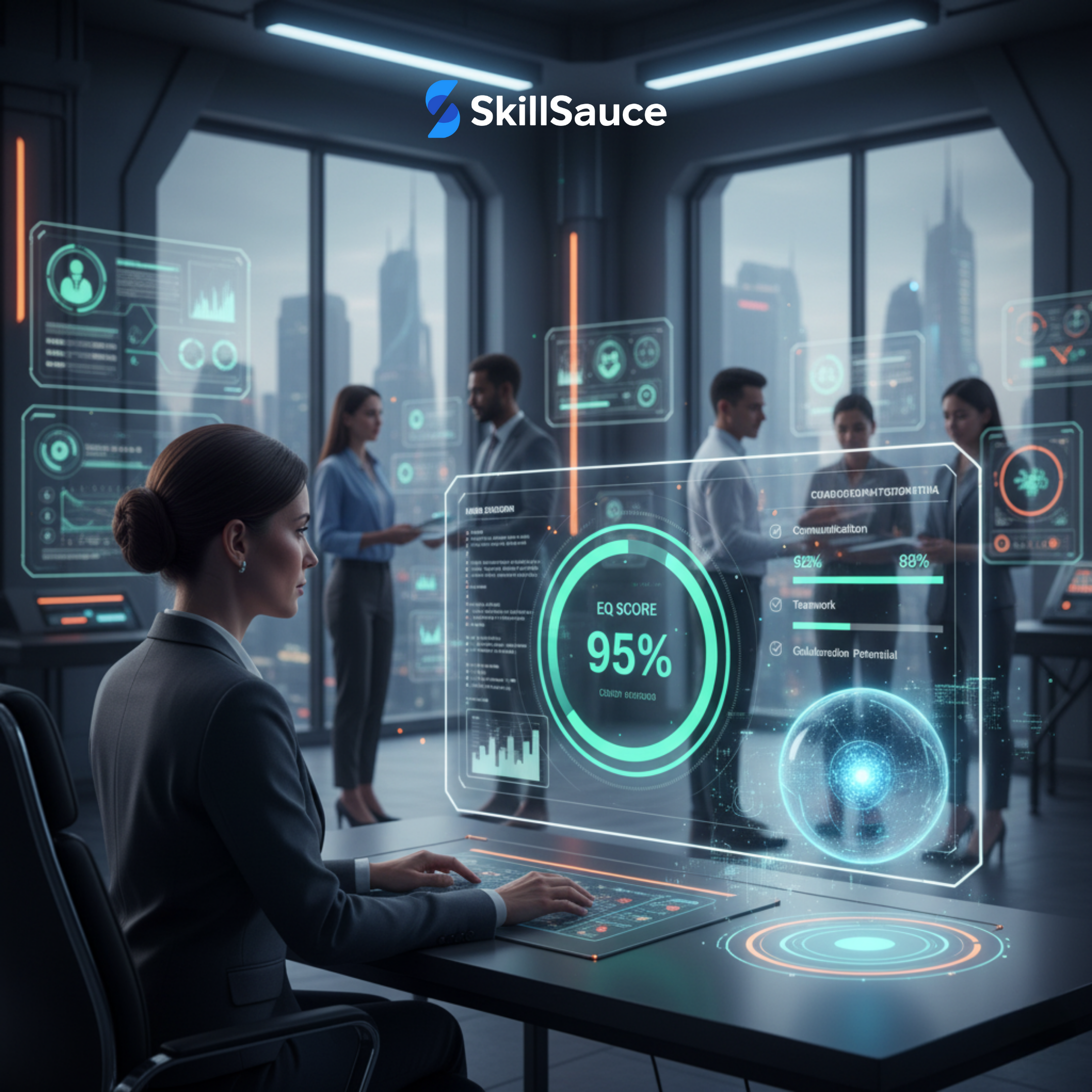
As automation reshapes the workplace, EQ is becoming the true differentiator. By 2030, emotional intelligence will be one of the most in-demand leadership skills, especially in hybrid human-AI roles.
Expect more companies to adopt AI-driven EQ assessment platforms and make emotional intelligence a formal KPI in recruitment, promotion, and leadership development.
Conclusion: Building Future-Ready Tech Teams
Technical skills get projects started. Emotional intelligence keeps them going. With emotional intelligence assessment becoming mainstream, startups and enterprises that embrace it will not only avoid mis-hires but also achieve higher retention, stronger team performance, and lasting recruitment ROI.
The smartest tech recruiters today know: you don’t just hire code—you hire people.