

Introduction
Traditional interviews often fail to capture the subtle human elements that define great candidates — empathy, adaptability, and emotional intelligence.
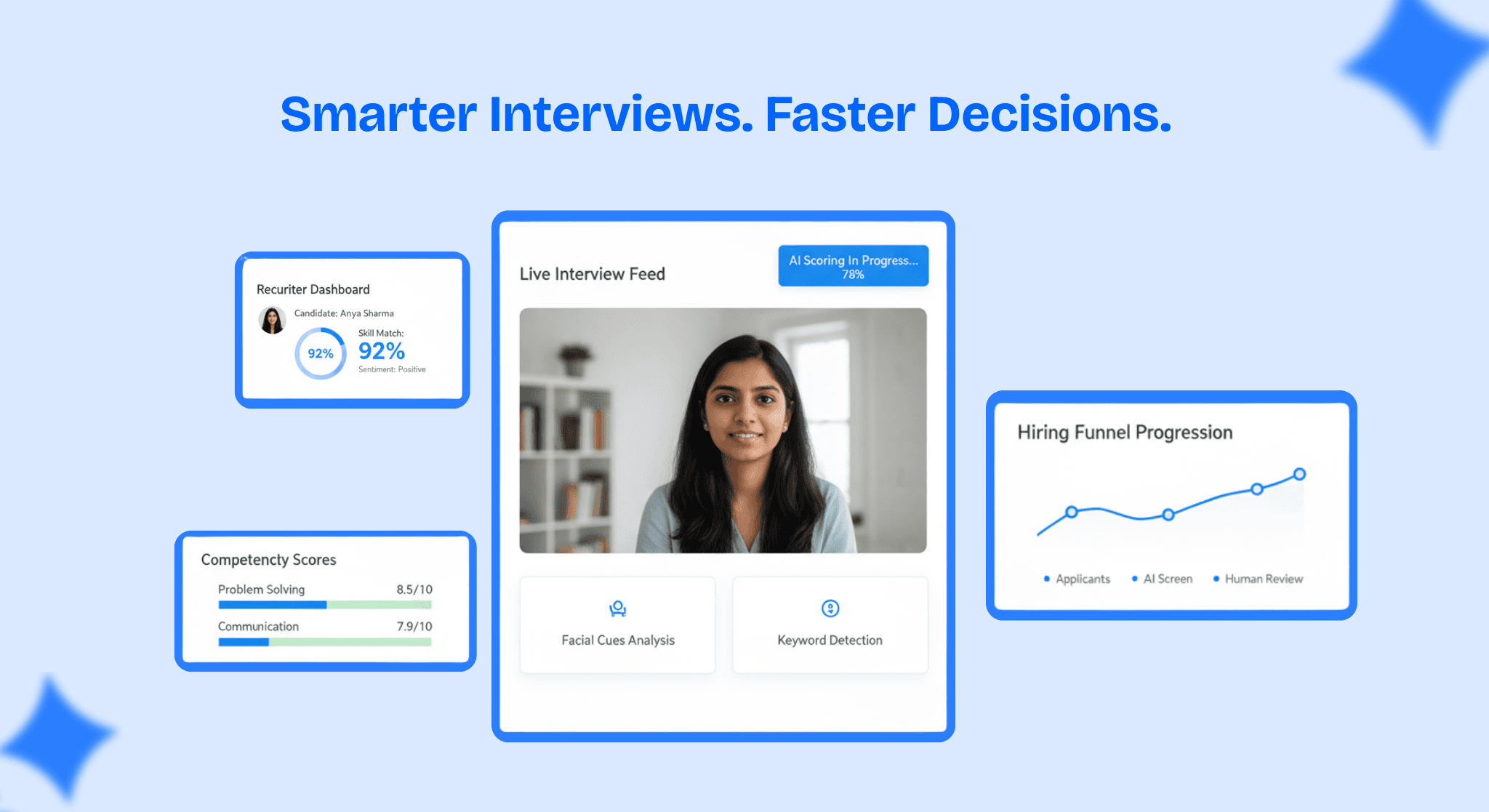
In today’s remote-first world, AI has evolved to read beyond words, analyzing tone, facial expressions, and body language to assess soft skills objectively. This isn’t science fiction; it’s how modern organizations now make smarter and fairer hiring decisions.
The Growing Importance of Soft Skills
Soft skills have become the backbone of modern teamwork.
A 2025 SHRM report revealed that 72% of employers now weigh soft skills as heavily as technical expertise. The shift to hybrid workplaces has made communication, collaboration, and adaptability more crucial than ever.
AI-driven assessments are helping recruiters quantify these once “intangible” qualities — ensuring that every candidate is evaluated on both capability and character.
How AI Evaluates Soft Skills
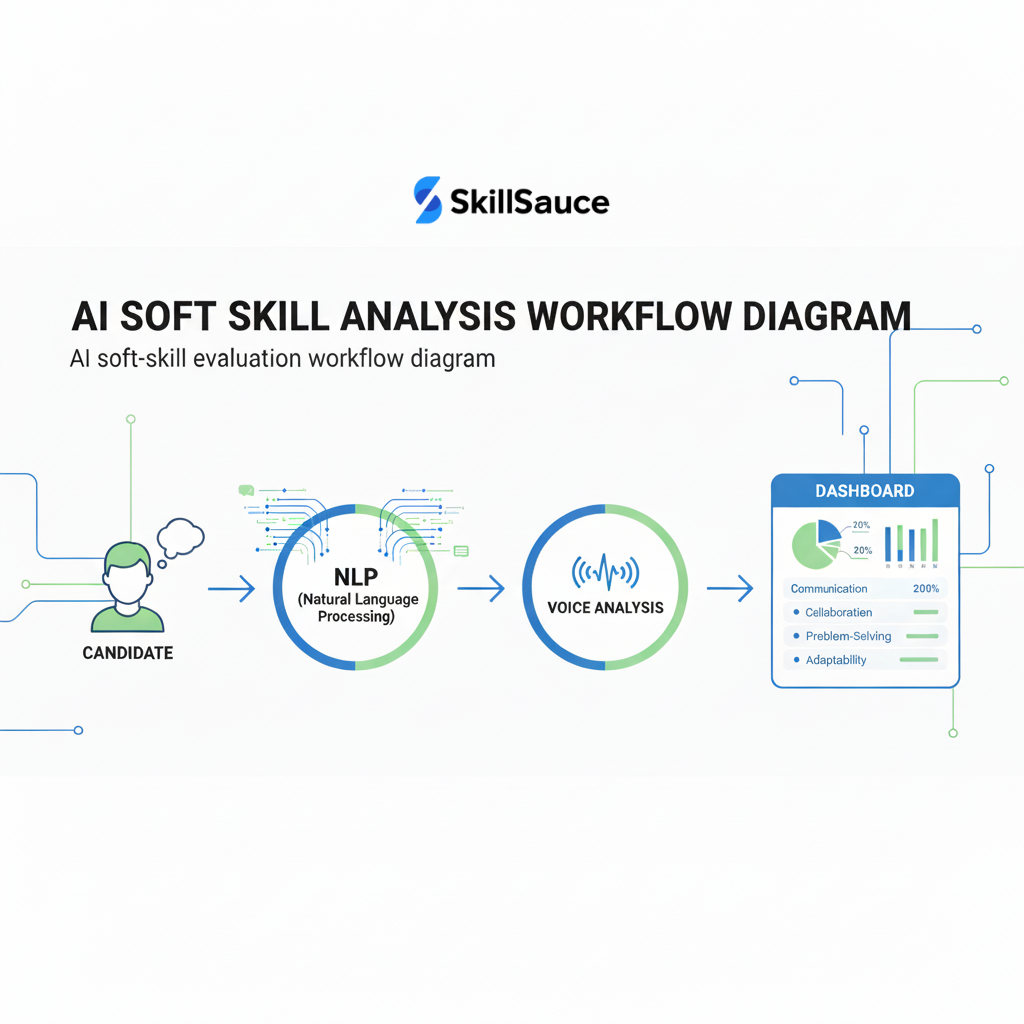
AI doesn’t just record interviews; it interprets them. Advanced algorithms convert behavioral cues into measurable insights across several layers:
1. Natural Language Processing (NLP)
Analyzes speech and written answers for structure, confidence, and emotional tone. For instance, AI can detect how assertive or empathetic a candidate’s responses are.
2. Emotion Recognition
By mapping facial expressions and micro-movements, AI gauges how candidates react under pressure — measuring composure, engagement, and empathy.
3. Voice Analytics
Tone, pitch, and pace reveal much about personality and confidence. AI identifies stress indicators or enthusiasm that may not surface in words.
4. Behavioral Tracking
Using camera-based cues like posture and eye contact, AI creates a holistic profile of presence and attentiveness.
These signals together provide a 360° soft-skill profile that helps recruiters make data-backed decisions, not gut-based ones.
Benefits for Recruiters and Candidates
1. Fairness and Objectivity
AI minimizes unconscious bias by applying consistent criteria to every applicant.
2. Efficiency
Automated analysis can reduce interview screening time by up to 75%, freeing recruiters to focus on culture fit and human judgment.
3. Consistency
Whether you’re hiring 10 or 10,000 people, AI ensures identical standards across all candidates.
4. Improved Hiring Accuracy
AI-backed insights correlate with 50% higher employee retention and better team compatibility.
5. Enhanced Candidate Experience
AI assessments are often more flexible and transparent, reducing human subjectivity and increasing trust in the process.
Ethical and Practical Challenges
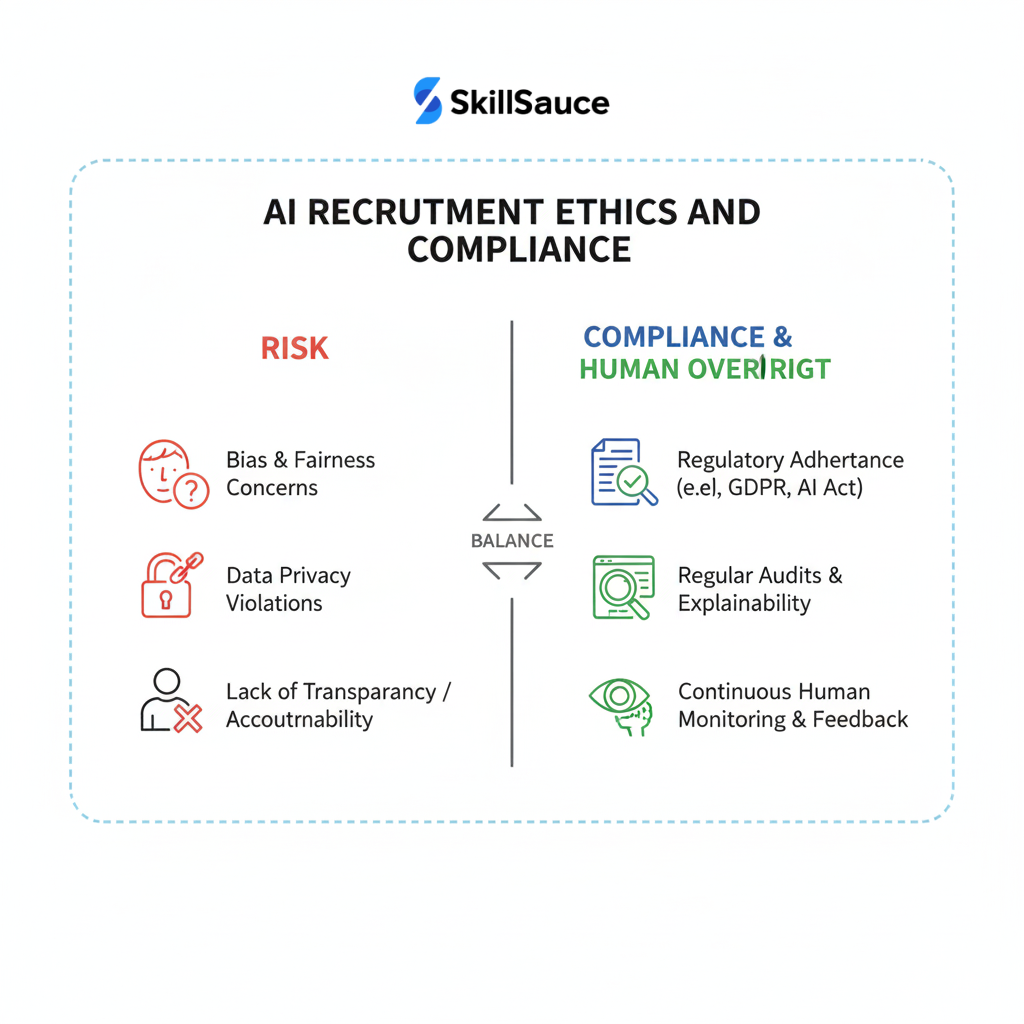
AI-driven hiring isn’t free from challenges — it demands accountability and transparency.
1. Data Privacy
Candidates must be clearly informed about how their audio, video, or textual data is being processed and stored.
2. Bias in Algorithms
Even machines can inherit bias if trained on skewed datasets. Continuous bias audits and diverse data training are critical.
3. Human Oversight
AI offers insights, not verdicts. Recruiters should treat its results as decision support, not as final judgment.
4. Transparency
Applicants deserve to know how AI influences their evaluation. This transparency fosters fairness and credibility.
Implementing AI Soft Skill Evaluation
Introducing AI into hiring requires the right balance between automation and empathy.
Select Reliable Vendors
Partner with transparent platforms like SkillSauce, which conduct regular bias audits and compliance checks.
Combine Human + AI
AI identifies behavioral trends, while recruiters interpret context and cultural fit.
Continuous Improvement
Regularly update models with new data and feedback loops to reduce drift and maintain fairness.
Communicate Clearly
Explain the AI process to candidates before interviews — clarity enhances trust and brand reputation.
Measure Impact
Track outcomes like diversity ratios, retention rates, and candidate satisfaction to ensure real-world success.
Real-World Applications
AI soft-skill evaluation is proving transformative across multiple sectors:
- Customer Support: Empathy and active listening predict satisfaction scores.
- Sales: Confidence and persuasion styles correlate directly with performance.
- Remote Teams: Communication and accountability metrics improve team alignment.
- Leadership Roles: Emotional intelligence and adaptability ensure stability and influence.
In each case, AI offers evidence-based insights that go beyond what a résumé or 30-minute chat can reveal.
The Future of AI in Soft Skill Assessment
The next frontier lies in multimodal AI — combining voice, video, and text analysis in real time. This holistic approach will allow recruiters to assess not just what candidates say, but how and why they say it.
As technology evolves, so will ethical frameworks ensuring fairness, inclusivity, and transparency. The goal isn’t to replace human recruiters, but to augment their perception with objective, data-driven insight.
Conclusion
Soft skills define human success, and AI is redefining how we measure them.
By reading beyond words — capturing tone, emotion, and subtle behavioral signals — AI soft skill evaluation enables fairer, faster, and more predictive hiring.
When used responsibly, it creates a future where empathy meets analytics, ensuring the right people find the right roles — not by luck, but by design.