


Did you know that 94% of employers find skills-based assessments better predictors of success than résumés?
The hiring and development scene has changed dramatically. About 81% of employers now use some form of skills-based hiring, up from just 56% in 2022. It also helps that 68% of candidates prefer this approach.
But many organizations still can't learn about what their workers can really do—or where they might be falling short. This challenge grows more urgent as the skills needed for the average job have changed by 25% since 2015. These changes could double by 2027.
We've faced these challenges ourselves. That's why we created this complete guide to measuring skills effectively. You'll find employee skill assessment methods and practical templates to track employee skill development. We'll show you exactly how to build a system that works.
Getting a full picture of employee skills and competencies isn't optional anymore. Your organization needs it to keep workers skilled and motivated, which leads to success. Let's tuck into the methods that deliver results.
What is Employee Skill Assessment?
Employee skill assessment is the foundation of strategic workforce development in today's ever-changing workplace. Traditional performance reviews look at past achievements, while skill assessments give a well-laid-out picture of an employee's current abilities and competencies.
Definition and purpose
An employee skill assessment helps organizations systematically check an individual's expertise in various knowledge areas, skills, and competencies needed for specific roles. This approach measures whether employees can do their jobs well or how they perform specific tasks.
These assessments do more than just review performance—they build a foundation for better organizational performance and growth. Organizations can make smarter decisions about hiring, promotions, and training programs. The process gives employees valuable feedback about their strengths and where they need to improve, which encourages ongoing development.
Types of skills measured
A complete skill assessment looks at several skill categories:
- Hard skills: These tests check expertise in specific, teachable abilities like software operation or technical knowledge. They show if employees have the technical skills needed for their roles.
- Soft skills: These look at people skills such as communication, teamwork, and adaptability—vital for jobs that need good collaboration and leadership.
- Cognitive abilities: Tests that measure reasoning, problem-solving, and comprehension show an employee's ability to learn and handle new situations.
- Job-specific skills: These target abilities unique to specific roles or industries.
- Leadership skills: Tests that check decision-making and strategic thinking abilities.
A strong assessment should show how well someone performs in each skill area to find any gaps.
When and why to assess skills
Companies use skill assessments throughout an employee's journey:
Skills assessments help companies evaluate job candidates. Studies show that companies using pre-hire assessment tests see 39% less turnover. Hiring managers who use these assessments feel 36% more confident about their final choices than those who don't.
Current employees benefit from assessments in many ways. The tests help identify training needs, support career growth, and plan for future leadership roles. Regular checks ensure employee skills match their current work and future company plans.
Different industries need different assessment schedules. Tech companies often need more frequent reviews because things change faster, while stable industries can wait longer between assessments.
Employee skill assessments help companies understand and grow their workforce's potential. Organizations can plan talent development better and create individual-specific learning paths that benefit everyone through objective evaluation.
Key Benefits and Common Challenges
Employee skill assessment brings real results when organizations use it strategically. A clear understanding of both benefits and drawbacks helps build an assessment system that drives success.
Improved workforce planning
Systematic employee skill assessments change how organizations handle talent management. These evaluations reveal critical skills gaps throughout the organization. Learning and development managers can then design targeted training programs that fix specific weaknesses.
The numbers tell a clear story: 87% of companies worldwide either face a skills gap now or expect one soon. Without good assessment methods, these gaps stay hidden until they hurt performance.
Skill assessments reveal valuable insights about talent allocation. To cite an instance, healthcare organizations can quickly find employees with respiratory credentials during a surge of patients with breathing problems. This precise staff deployment shows how assessment data leads to smart talent decisions.
A detailed assessment approach also:
- Spots high-potential employees who might stay hidden, especially in bigger organizations
- Shows whether to create new positions or upgrade existing staff skills
- Finds unused talents that could give competitive edges
- Supports planned growth by mapping individual strengths and weaknesses
Better hiring and promotion decisions
Skill assessments make a difference before an employee even starts. Companies that use pre-employment assessment tests see a 39% drop in turnover rates. This saves substantial money given how expensive it is to replace departing employees.
Hiring managers who include skills assessments in recruitment feel 36% more satisfied with their final choices compared to those who stick to traditional methods. This confidence comes from having solid data alongside interview impressions.
Skill assessments create a foundation of fair, objective evaluations for internal promotions. Employees move up based on proven abilities rather than bias or favoritism. This method excels at finding future leaders by spotting leadership potential in unexpected places.
Post-training assessments verify that employees learned the intended job skills from their training. The organization can quickly assign extra microlearning or refresher courses when gaps remain.
Challenges with bias and time constraints
Skill assessments face real hurdles despite their benefits. Bias tops the list and can creep into every assessment stage. It represents a systematic shift from truth in results or conclusions, working both ways—too high or too low. A worrying 48% of HR managers admit that bias affects their candidate choices.
Time limits create another big challenge. Standard time restrictions in cognitive tests can hurt people who don't perform well under pressure, leading to lower scores than they deserve. Research shows that removing time limits can boost scores by almost one standard deviation.
The work needed to plan and run detailed skill assessments takes significant time. Organizations need to pick assessment types, design them well, give the tests, study results, and take action based on findings.
Employee resistance can weaken assessment effectiveness, especially from long-term staff who aren't used to formal evaluation. Some see these tests as threats instead of growth opportunities.
Mixing number-based metrics with qualitative feedback remains tricky. The clearest picture comes from combining performance metrics with input from peers and managers—a balance that many organizations don't handle very well.
7 Expert Methods to Measure Employee Skills
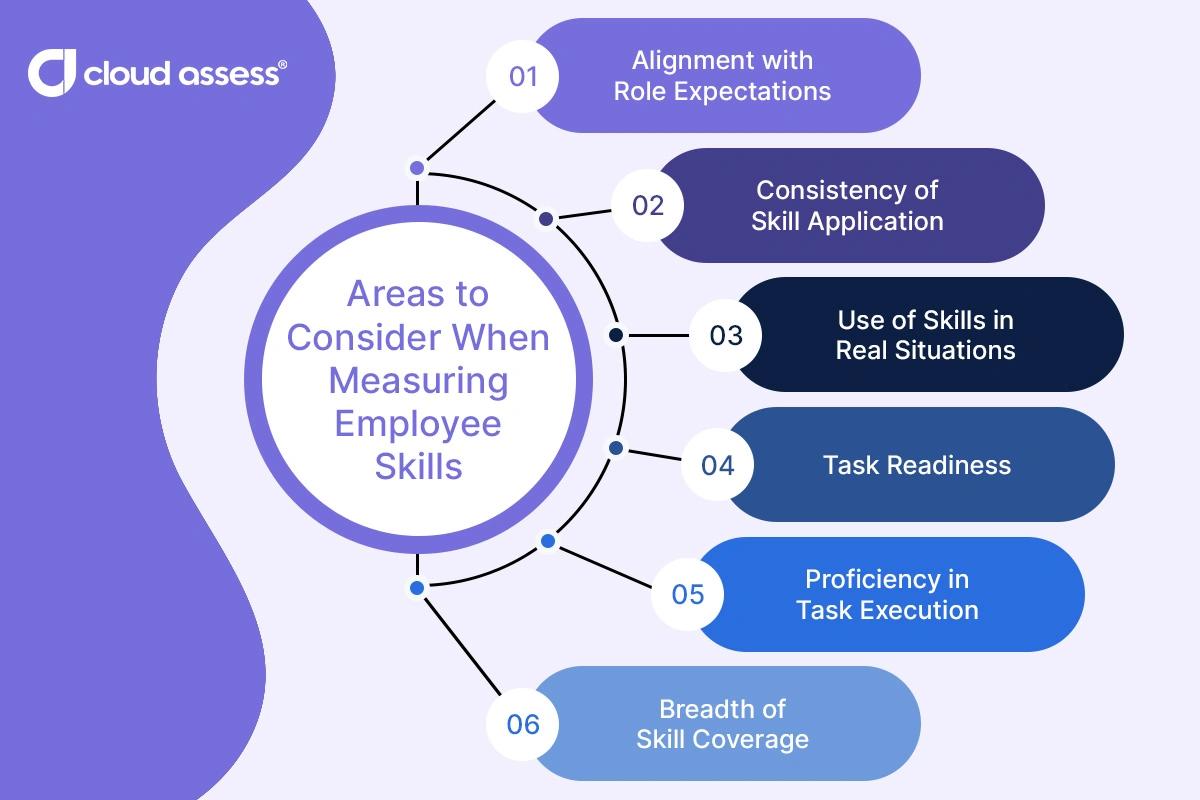
Image Source: Cloud Assess
Organizations need to choose the right assessment methods to measure employee skills accurately. Here are the most effective approaches that leading companies use worldwide.
1. Self-assessments
Self-assessments help employees contemplate their capabilities and areas they need to improve. This process of self-reflection encourages personal responsibility and helps employees stay objective about their abilities over time. These economical solutions can have bias—employees might overestimate or underestimate their skills. Therefore, they work best when other assessment methods verify them.
2. Manager evaluations
Manager evaluations confirm or refine the original self-assessments by adding a supervisor's viewpoint on an employee's skill proficiency. Unlike complete performance reviews, skill-specific manager assessments focus on proving it right whether employees have reached specific competency levels. Studies show managers influence at least 70% of the variance in employee engagement scores in business units.
3. 360-degree feedback
360-degree feedback collects input from multiple sources—peers, subordinates, supervisors, and self-assessments. This provides a complete view of an employee's strengths and development areas. Companies prefer this method as they move away from traditional top-down evaluations. About 89% of companies worldwide use 360-degree feedback to understand employee strengths and weaknesses better.
4. Practical skill tests
Skill tests measure competencies directly through standardized assessments. These tests include numerical evaluations, coding challenges, language proficiency checks, or psychometric assessments based on the role. These objective measurements work best for technical or "hard skills" that you can easily measure.
5. Work sample assessments
Work sample tests ask candidates to perform tasks like real job responsibilities. Work samples mirror specific work scenarios closely and reduce the gap between testing situations and job performance. Studies show work samples predict future success more reliably—even better than interviews.
6. Behavioral interviews
Behavioral interviews review employees by asking them to share specific examples of past situation handling. Interviewers use the STAR method (Situation/Task, Action, Result) to analyze responses and see how past behavior matches required competencies. This technique works well in any discipline, including manager assessments.
7. Skill assessment software
Modern skill assessment platforms make the evaluation process standard and automatic. These tools test employees' abilities through different question formats and practical exercises. About 82% of employers now use some type of assessment technology. The best software combines cognitive tests with work samples and allows testing that matches daily tasks of any role.
How to Conduct a Skill Assessment Step-by-Step
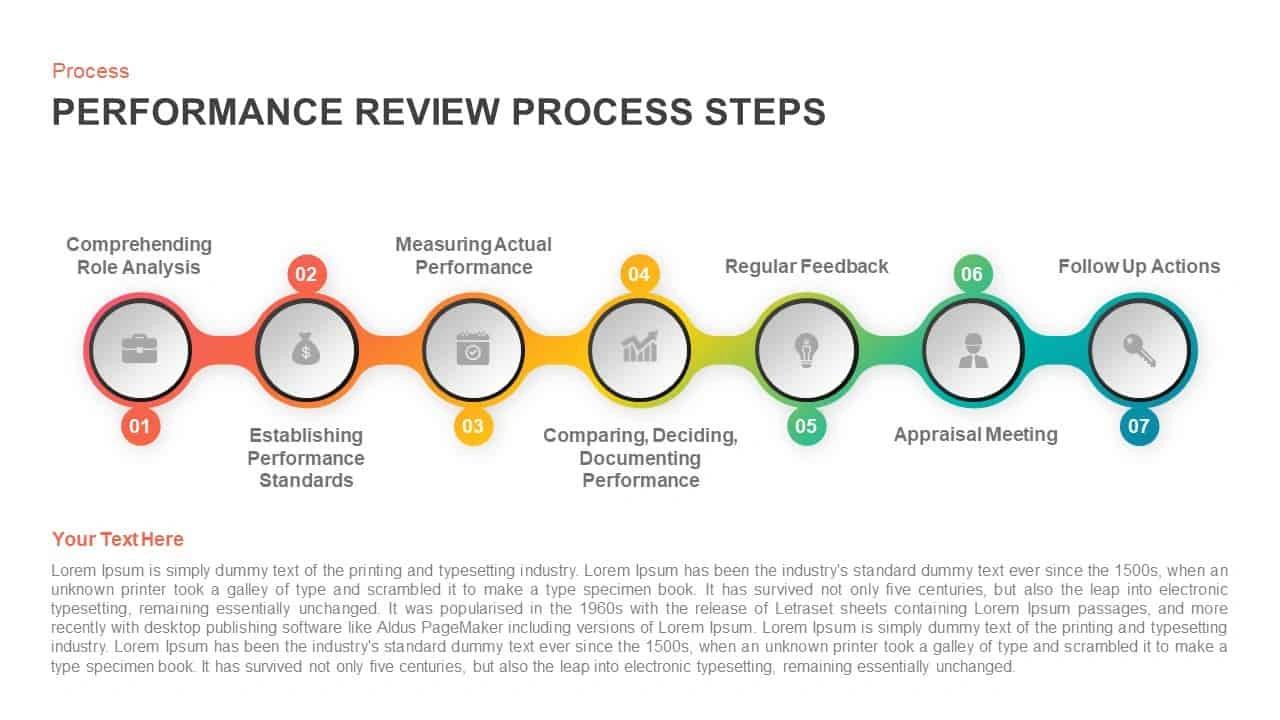
Image Source: SlideBazaar
A skill assessment needs a step-by-step approach with a well-laid-out process. This method will help you collect useful data about employee capabilities and stay objective.
Set clear objectives
Your first task is to nail down why you need this assessment. You should ask yourself: Do you want better workforce planning, training needs identification, or succession planning? Your goals must line up with what your organization wants to achieve. You need specific targets, like finding skill gaps in departments or checking competencies for new projects. Data collection without clear goals will not help you make decisions.
Choose relevant competencies
Once you have your objectives, list the vital skills each role needs. You should work together with department heads to figure out both job-specific and soft skills needed for different positions. Think over both today's needs and what you'll need tomorrow so your assessment stays useful as your organization grows. A competency is a "measurable pattern of knowledge, skills, abilities, behaviors, and other characteristics that an individual needs to perform work roles successfully".
Select the right methods
Your best bet is to mix different assessment approaches for a detailed evaluation. You have options like self-assessments, manager evaluations, practical tests, 360-degree feedback, and assessment software. Pick methods that fit your company culture and what you want to achieve. The complexity of skills, time limits, and how candidates experience the process should guide your choice.
Standardize evaluation criteria
You need specific rules for employee evaluation to keep things consistent between departments. Define what success looks like at each competency level and create evaluation guides that focus on competencies and skills. This approach cuts down on personal bias and keeps the assessment fair. A good option is to use numerical rating scales, like five-point or three-point systems, with clear definitions for each skill level.
Encourage employee participation
The assessment's purpose and benefits need clear communication to your team. Present it as a growth opportunity rather than a test. Show them how this process helps their professional growth and career advancement. Give proper training on assessment tools and be ready with answers to questions. Note that employee support affects how well the assessment works by a lot.
Analyze results and identify gaps
Take time to review your assessment data and spot patterns and trends. Look at what individuals and teams do well and where they struggle. See how your results stack up against industry standards and use what you learn to create targeted development strategies. Build action plans based on what you find, including custom training programs, mentoring, and cross-functional projects.
Using Templates and Tools for Better Results
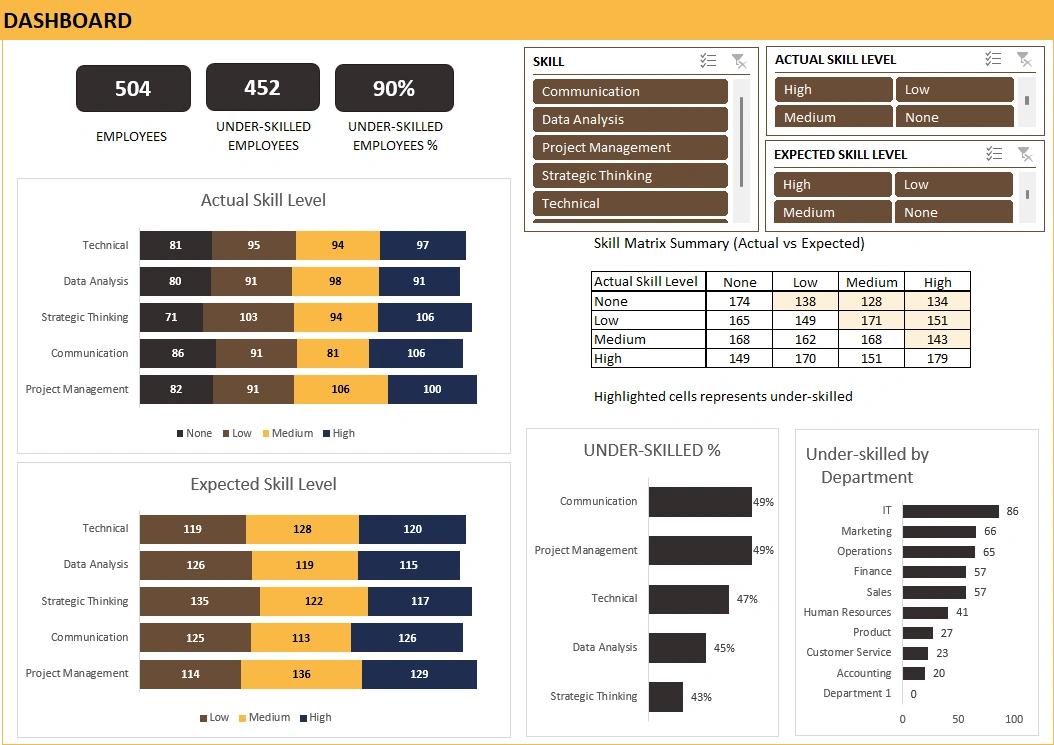
Image Source: Eloquens
Your skill assessment process works best when you have the right tools. Modern assessment platforms and ready-to-use templates help you gather applicable information and speed up evaluations.
Free employee skill assessment template
Pre-made assessment templates save you from creating evaluation systems from scratch. These easy-to-use resources come with formats for manager evaluations, self-assessments, and 360-degree feedback forms. The best templates provide clear instructions, skill categories, and proven rating scales that make analysis easy. A free template in Excel or similar formats gives you a solid framework. Your organization saves time and maintains consistent evaluation standards.
Employee skill matrix for tracking
A skills matrix shows your team's capabilities in a visual format. This makes spotting strengths and gaps quick and simple. The tracking tool puts employees in rows and skills in columns. It uses a numerical rating system from 0-3 or 1-5 to show skill levels. Managers can use these matrices to assign projects better, spot training needs, and plan succession. Team members benefit too. They see clear paths to develop skills that match their career goals.
Modern vs traditional tools comparison
Paper tests and manual surveys might look budget-friendly at first, but they waste time and resources. Digital assessment platforms bring automation, standard evaluations, and up-to-the-minute data analysis. These modern tools let organizations search through workforce skills, create detailed reports, and keep assessment data in one place. On top of that, these platforms adapt well to organizations of all sizes. They support everything from targeted hiring to succession planning.
Conclusion
Organizations need skill assessment to succeed in today's fast-changing workplace. 94% of employers know that skills-based assessments predict success better than resumes, yet many find it hard to set up systems that give useful insights.
Your entire organization can benefit from employee skill assessment. You can spot skills gaps accurately and create targeted training programs instead of generic ones. On top of that, it helps you plan your workforce better by placing talent strategically and finding promising employees who might go unnoticed.
These seven assessment methods are a great way to measure employee capabilities. Self-assessments help employees take responsibility while manager evaluations validate their skills. The 360-degree feedback, practical skill tests, work samples, behavioral interviews, and assessment software each add value to your evaluation process.
Your success depends on a well-laid-out approach. Start by setting clear goals that match your organization's objectives. Choose the right competencies for each role before picking assessment methods. You should standardize evaluation criteria, get employees involved, and analyze results carefully to create focused development plans.
Templates and digital tools make this process smoother and save time while keeping things consistent across departments. Skills matrices help you see team capabilities quickly, which makes them essential for assessment and planning.
Note that regular skill assessment does more than find weaknesses—it creates paths for ongoing growth that help both employees and your organization. These methods will give you a clear view of your workforce capabilities, so you can make smart decisions about hiring, training, and planning. Start building a detailed skill assessment system today to help your organization stay ahead in this competitive digital world.
Key Takeaways
Effective employee skill assessment has become critical for organizational success, with 94% of employers finding skills-based evaluations more predictive than traditional resumes. Here are the essential insights for implementing a successful assessment strategy:
• Combine multiple assessment methods for comprehensive evaluation: self-assessments, manager evaluations, 360-degree feedback, practical tests, work samples, behavioral interviews, and digital platforms.
• Follow a structured six-step process: set clear objectives, choose relevant competencies, select appropriate methods, standardize criteria, encourage participation, and analyze results systematically.
• Use templates and digital tools to streamline processes and ensure consistency—skills matrices provide visual workforce capability mapping for strategic decision-making.
• Address common challenges proactively: minimize bias through standardized criteria, manage time constraints effectively, and frame assessments as development opportunities rather than threats.
• Focus on actionable outcomes: identify specific skill gaps, create targeted training programs, optimize talent allocation, and support data-driven hiring and promotion decisions.
When implemented correctly, skill assessments transform workforce planning from guesswork into strategic advantage, enabling organizations to develop talent systematically while improving employee engagement and retention rates.