

Why Cognitive Assessment is the Strongest Predictor of Job Performance
Introduction
Cognitive assessments are revolutionizing modern recruitment. By measuring mental agility, problem-solving skills, and adaptability, these evaluations allow HR professionals to make science-backed hiring decisions. They not only forecast employee performance and productivity but also help organizations build more resilient, future-ready teams capable of handling dynamic workplace challenges.
What is a Cognitive Assessment? Definition and Purpose
Cognitive assessments are structured, standardized tests that objectively measure an individual’s mental capabilities crucial for job performance. These abilities include reasoning, memory, problem-solving, and learning agility—all key predictors of success in dynamic workplace environments.
These evaluations serve as powerful pre-employment cognitive tests, providing data-driven insights that help organizations make unbiased and effective hiring decisions, significantly reducing reliance on intuition.
Key Functions of Cognitive Assessment:
- Act as essential aptitude and reasoning tests tailored directly to specific job contexts.
- Offer objective, standardised insights compared to subjective traditional interviews.
- Integrate seamlessly with psychometric hiring tools for holistic talent evaluation.
The Core Abilities Measured by Cognitive Assessment
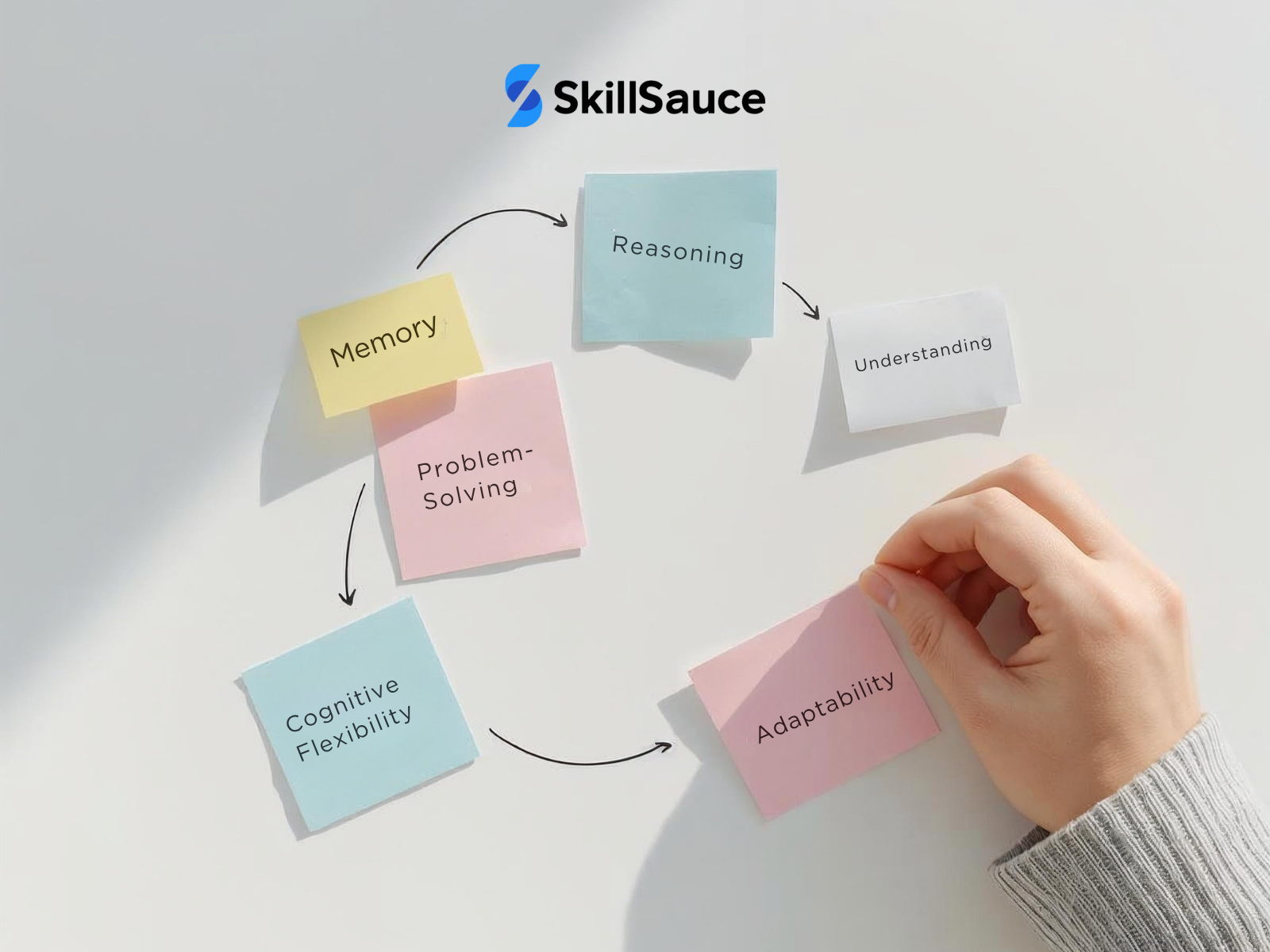
Modern cognitive assessments measure multiple areas of intelligence to evaluate how candidates think, learn, and solve problems, not just what they know.
1. Reasoning (Logical, Verbal, Numerical)
This assesses analytical thinking, data interpretation, and abstract reasoning. These skills are vital for success in complex technical, managerial, and data-driven roles.
2. Memory
This measures short-term and working memory, demonstrating how well a candidate can retain, process, and apply information during multi-step tasks.
3. Problem-Solving
This evaluates a candidate's creativity and their ability to navigate complex, novel challenges—a fundamental requirement for innovation-driven industries.
4. Adaptability
This reflects learning agility and responsiveness to change, which is crucial for thriving in fast-paced or rapidly evolving work environments.
Research-Backed ROI: Cognitive Assessment and Job Performance
Studies consistently confirm that cognitive assessments are among the strongest predictors of real-world job performance and organizational success.
Validity Coefficient: Meta-analyses show a 0.51 correlation between general cognitive ability and job performance—a prediction coefficient significantly higher than those achieved by resumes or unstructured interviews. Retention Boost: Companies using structured cognitive assessments report a 20% increase in retention and typical 15–30% productivity gains. Incremental Validity: Specific cognitive abilities (quantitative, verbal) can predict role-specific success equally or better than a general IQ score.
Comparison: Cognitive Assessments vs. Psychometric Tests vs. Interviews
| Method | Predictive Accuracy | Objectivity | Assesses | Limitations |
|---|---|---|---|---|
| Cognitive Assessments | High (validity ~0.51) | Strong | Reasoning, problem-solving, memory, adaptability | May miss soft skills, risk bias |
| Psychometric Tests | Moderate to High | Strong | Personality, aptitude, cognitive skills | Interpretation, requires context |
| Traditional Interviews | Low (validity ~0.20) | Weak | Experience, communication, fit | Subjective, bias, lacks consistency |
Real-World Data:
- Google: Top 20% performers on cognitive assessments consistently outperform their peers in innovation and output metrics.
- IBM: Saw a 25% retention improvement and 15% efficiency increase after integrating structured cognitive testing into their process.
- Deloitte: Continuous cognitive testing saved over $1 million annually through better employee engagement and reduced turnover.
This strong link between mental agility and business success is why the Harvard Business Review confirms that cognitive skills are essential in modern hiring. Furthermore, the SHRM – Talent Assessment Practices Report highlights best practices for integrating assessment for maximum impact.
Dual Benefits of Cognitive Assessment for Employers and Candidates
Cognitive assessments deliver value across the entire hiring ecosystem, benefiting both the company and the applicant.
For Employers
- Reduces unconscious bias by up to 30% by replacing intuition with objective data.
- Identifies high learning agility for leadership and growth roles.
- Increases diversity and retention with truly merit-based, objective data.
For Candidates
- Offers a fair, merit-based evaluation that looks beyond educational credentials and resumes.
- Provides valuable feedback that can enhance personal and career growth.
- Opens doors to roles based on genuine capability and potential, not just experience.
To understand how behavioral and cognitive traits combine for better talent evaluation, read more about Psychometric Testing in Hiring.
Ethical Considerations and Limitations of Cognitive Assessment
Despite their profound benefits, cognitive assessments must be used responsibly and ethically.
Critical Considerations:
- Potential Bias: Poorly designed or culturally insensitive tests can unintentionally disadvantage certain groups. Validated, bias-free platforms are essential.
- Accessibility: Ensure testing tools are mobile-friendly and inclusive for all candidates, regardless of their technology or location.
- Holistic Context: Assessment results must always be combined with structured interviews, work samples, and soft skill evaluations to create a complete candidate profile.
The Future of Cognitive Assessment: AI and Adaptive Testing
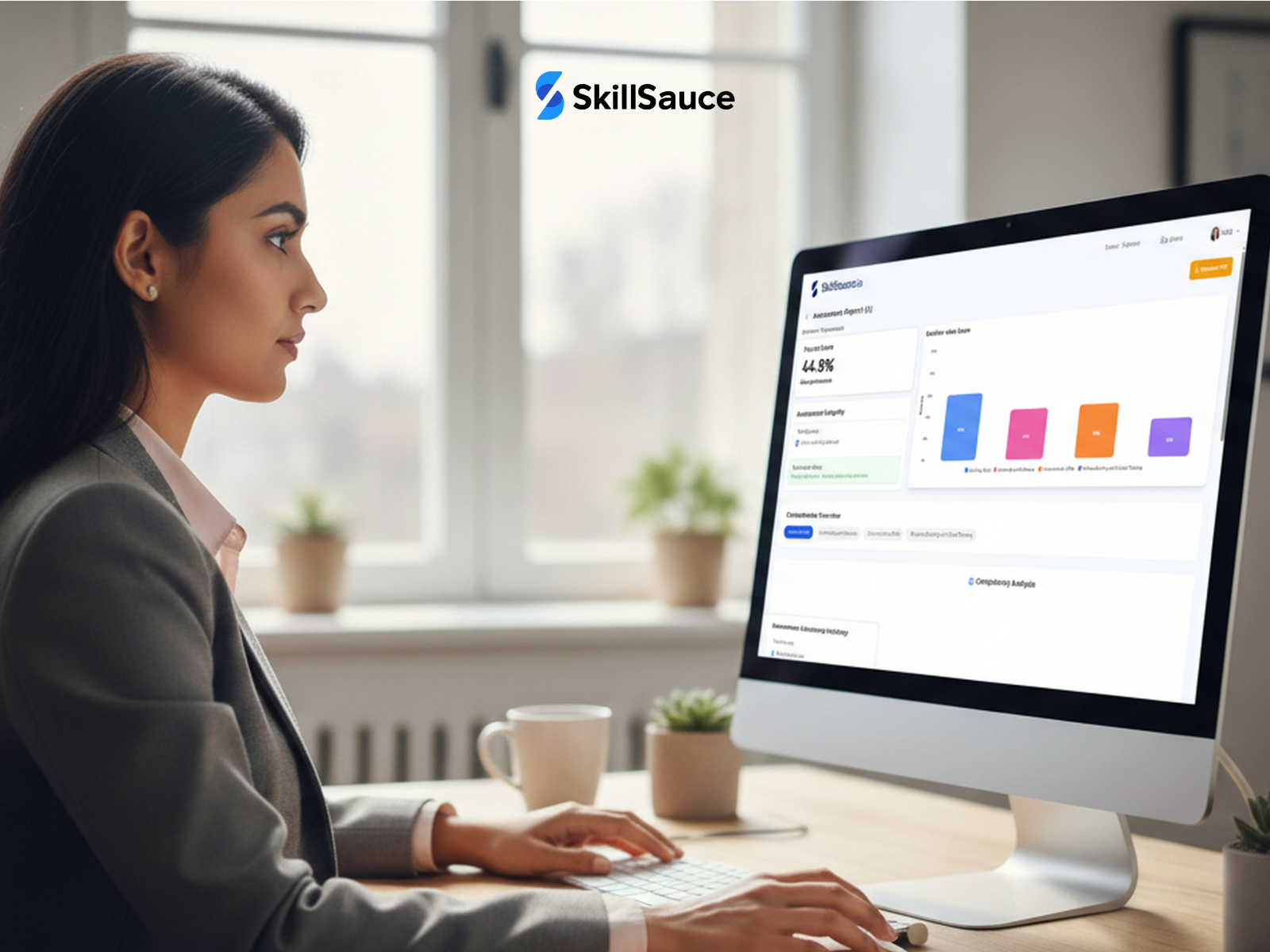
Emerging HR technology is making cognitive evaluation smarter, faster, and fairer than ever before.
- AI-Driven Adaptive Testing: AI algorithms adjust difficulty dynamically based on a candidate's previous answers, cutting test time by 50% while maintaining precision.
- Continuous Learning Platforms: Tools are beginning to integrate ongoing cognitive growth tracking into L&D systems.
- Predictive HR Analytics: Assessment data now connects directly with key performance indicators (KPIs) to forecast long-term employee success and minimize turnover risk.
Ensuring integrity is key—learn how AI Proctoring ensures fairness and transparency in online assessments.
Summary: Implementing Cognitive Assessment for Future-Ready Teams
Cognitive assessments empower HR teams to move from intuition-based to data-driven hiring. By integrating these evaluations with structured interviews, psychometric tools, and predictive AI analytics, organizations can identify top talent faster and build adaptable, high-performing teams ready for tomorrow's challenges.
Action Steps for HR Professionals
- Combine cognitive, psychometric, and behavioral assessments for a 360° evaluation.
- Use validated, bias-free platforms for test accuracy and legal compliance.
- Review and update question banks regularly for relevance and fairness.
- Train hiring teams to interpret assessment results effectively and integrate them into the final decision.
To see how interactive testing improves engagement, explore Gamified Assessments in Recruitment.