

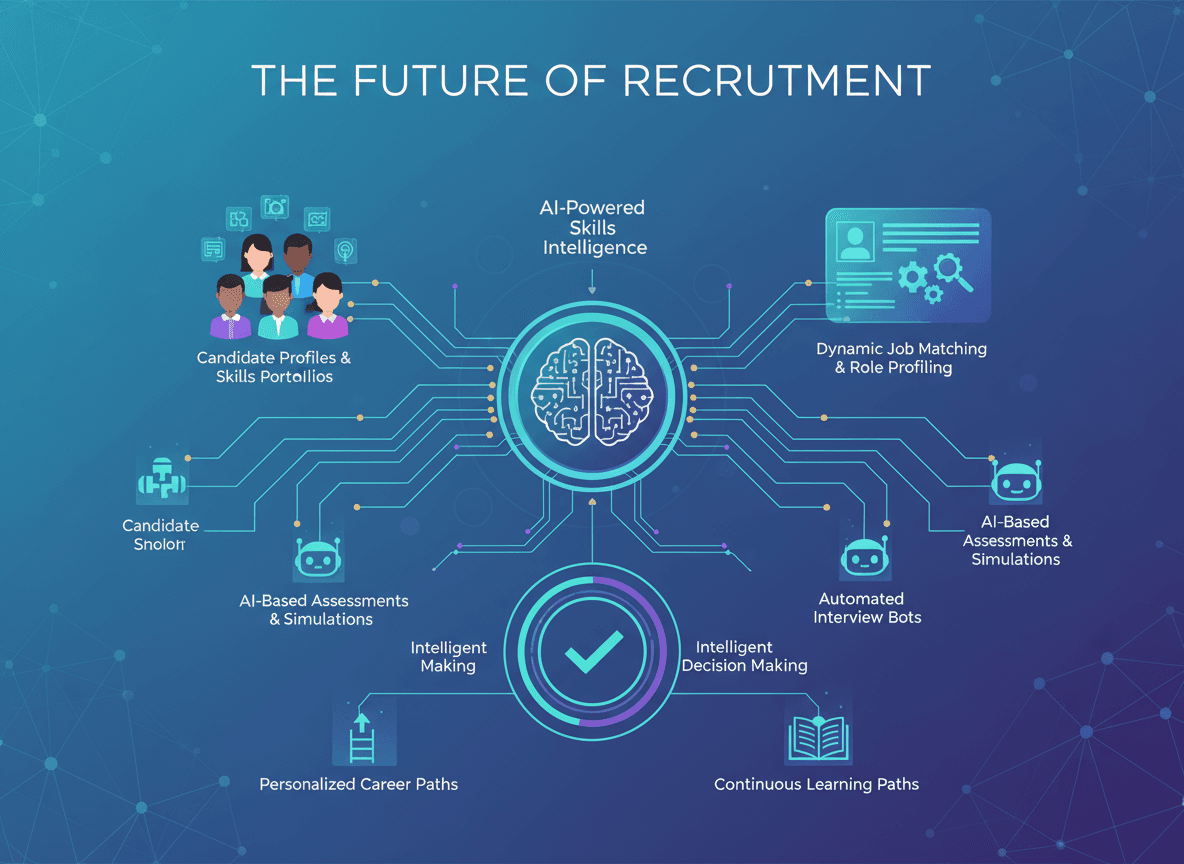
In 2025, skills-based hiring is moving from a fringe trend to a mainstream talent strategy. Major companies are rethinking the long-standing assumption that degrees guarantee capability. Instead, the focus is on what a candidate can actually do. The result? A more inclusive, nimble, and high-performing workforce.
This shift is supported by insights from leading authorities:
- McKinsey: Their Right skills, right person, right role study emphasizes that aligning skills with job requirements improves performance and talent deployment.
- World Economic Forum (Davos 2023): They highlight how a skills-first hiring approach expands access to opportunities. (read more)
What the Data Says About Skills-Based Hiring
Evidence from leading organizations and researchers points to tangible business benefits when you focus on skills.
Industry Insights Supporting Skill-Based Hiring
Continued industry data shows a rising adoption of skills-based hiring into 2024 and 2025, with organizations reporting faster onboarding and better retention. See the TestGorilla insights and the State of skills-based hiring 2025 reports.
6 Steps to Implement Skills-Based Hiring in Your Organization
A robust skills-focused framework begins with clear role mapping and capability-based evaluation. Follow these key steps for successful implementation:
- Map Roles by Skills: Identify the essential competencies and outcomes for each key role. Move beyond traditional degree filters.
- Use Validated Assessments: Employ reliable job simulations, coding tasks, cognitive tests, or structured assignments that reflect real work.
- Integrate Technology: Combine applicant tracking, skill testing, and AI proctoring to scale your process fairly and securely.
- Train Hiring Teams: Calibrate interviewers to interpret assessment results consistently and reduce bias.
- Pilot, Then Scale: Start with one department or function. Compare outcomes against your legacy process before a full rollout.
- Track Success Metrics: Monitor Quality of Hire, time-to-fill, retention, and post-hire performance to demonstrate ROI.
Tools for Scalable & Fair Skills-First Hiring
Technology makes skills-first hiring practical at scale. Your toolkit should include:
- Assessments & Skill Measurements: Cognitive tests, job-skill simulations, and structured work samples quantify capability. Explore candidate assessment options in the Assessment Library and related Resources.
- AI Proctoring & Integrity: For remote roles, AI-proctoring helps preserve exam integrity while protecting candidate privacy. Learn more on the AI proctoring page.
- Bias Reduction: Bias-aware workflows and features, like those on Clara, help ensure a fair evaluation for every candidate.
- Talent Analytics: Track quality-of-hire, time-to-productivity, and retention with dashboards. Explore advanced analytics on the Features page.
Measuring Success & ROI
Measuring the impact of a skills-based approach centers on aligning hiring metrics with business outcomes. Use a balanced scorecard that tracks:
- Quality of Hire: (performance-to-peer benchmarks, ramp time)
- Speed: Time-to-fill and time-to-productivity
- Retention: Retention and promotions
- Inclusion: Diversity and inclusion outcomes
Indeed highlights practical methods to measure success for skills-based hiring. Their guidance covers defining success criteria, setting benchmarks, and implementing robust analytics to monitor progress. (Indeed guidelines)
Fairness, Bias & Compliance (EEAT Signal)
Fairness remains a core concern. To maintain compliance and build trust, you must: Use validated assessments that reflect job tasks, calibrate interviewers, and run ongoing bias audits. For policy context and governance, see public sector resources that align with best practices in merit-based hiring. (OPM Merit Hiring Plan)
Case Studies & The SkillSauce Advantage
Real-world examples show how skills-first hiring translates into measurable gains:
- ROI & Costs: Companies shifting to skills-first hiring often report lower recruiting costs and higher-quality hires. (Fortune 500 tech company transition case study)
- Inclusion & Mobility: SHRM emphasizes the role of skills-first hiring in driving career mobility and inclusive hiring practices. (SHRM: Skills-first adoption)
- Public Perception: Fortune highlights the growing demand for skills-based hiring over traditional degree-based approaches. (Fortune coverage)
Building a Scalable Strategy with SkillSauce
SkillSauce helps teams operationalize skills-based hiring across the entire talent lifecycle.
Our Features cover job mapping, candidate evaluation, and analytics. Explore our Resources for best practices, and browse the Assessment Library for ready-to-use and customizable tests. For remote work, our AI proctoring ensures fairness and security at scale.