


Artificial intelligence in recruitment has become a reality - between 35% and 45% of companies now use AI in their hiring processes. AI recruitment continues to evolve, and experts project the sector to grow at a 6.17% compound annual growth rate from 2023 to 2030.
Many HR teams face challenges with implementation despite this growth. Recruiters spend an average of 23 hours screening resumes. The process becomes more complex as 75% to 88% of job applications fail to meet basic qualifications. AI recruitment tools are a great way to overcome these challenges. Companies that embrace automation or AI report 85% higher efficiency and time savings. The recruitment process also shows impressive results with up to 30% reduction in cost-per-hire.
Let's explore a practical, step-by-step method to add AI to your hiring workflow. You might want to join the 38% of HR leaders who have discovered AI solutions to boost their process efficiency. This piece will help you make a smooth transition with confidence and clarity.
Understanding AI in Recruitment
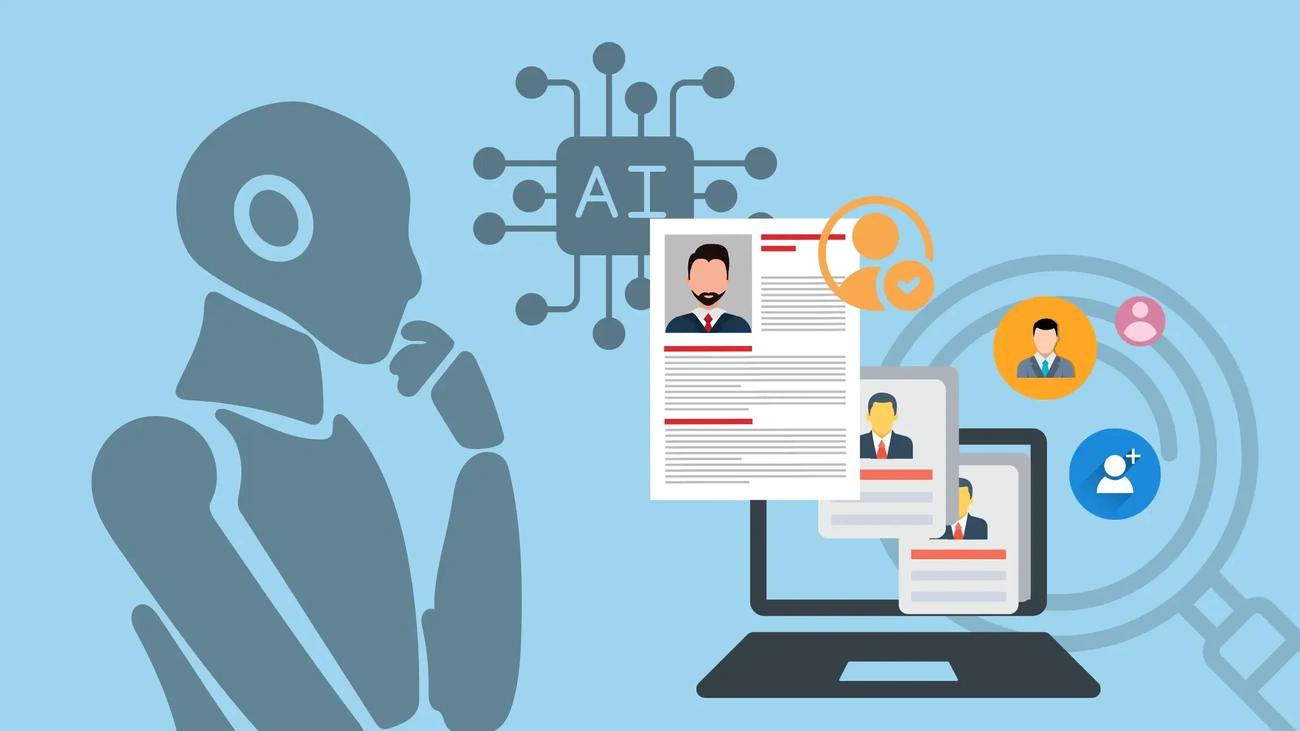
Technology has created a radical alteration in how organizations find and hire top talent. Organizations must understand the basics of this technology before they put it to use.
What is artificial intelligence recruitment?
AI recruitment uses artificial intelligence to transform traditional HR processes. The system uses algorithms, machine learning models, and smart systems that automate repetitive tasks and help make decisions. AI learns to recognize speech patterns, spot trends, solve problems, and predict future conditions by processing huge amounts of training data.
AI tools help HR teams automate routine, structured tasks. The technology can improve almost every part of the hiring process. This helps companies find the right talent and cuts down hiring time significantly.
How AI is changing HR workflows
AI has transformed HR processes by making them simpler:
- Screens resumes and ranks candidates based on their qualifications
- Makes scheduling and initial candidate communication easier
- Creates unbiased job descriptions and interview questions
- Gives skills tests to rank potential hires
- Provides feedback without bias
- Uses chatbots that talk to candidates 24/7
On top of that, AI helps HR teams find the "hidden workforce". It searches external data sources to understand potential candidates' skills. The results speak for themselves - 86.1% of recruiters say AI makes hiring faster.
Common misconceptions about AI in HR
Some myths stop companies from using AI recruitment fully:
Many people think AI will take over recruiters' jobs. The truth is that AI helps recruiters do their jobs better. It handles paperwork so HR teams can build relationships and have strategic discussions.
Some believe AI makes recruitment less personal. In stark comparison to this, AI handles boring tasks so recruiters can spend more time with candidates. Research shows that companies using AI for candidate interactions see 25% higher applicant satisfaction.
People often think only big companies can use AI recruitment. The reality is that AI-powered recruitment solutions are now affordable and available for businesses of all sizes.
Key Benefits of Using AI in Recruitment
AI in recruitment brings powerful advantages that reshape how organizations find and choose talent. Let's get into the key benefits this technology gives HR teams.
Faster candidate sourcing and screening
AI saves tremendous time in recruitment. Traditional resume screening takes up to 23 hours per hire, and recruiters spend 40% of their time sorting through applications manually. AI speeds up this process by automatically finding, sorting, screening, and highlighting top applicants. Advanced AI in applicant tracking systems now uses natural language searches instead of Boolean queries, which leads to faster and more accurate results. Recruiters can now focus on strategy and meaningful candidate interactions rather than paperwork.
Improved candidate experience through personalization
The candidate's experience improves by a lot through AI-powered customized interactions. AI-powered career sites show candidates suitable positions based on their skills and background, and explain why they fit each role. This targeted approach works exceptionally well—Chipotle's application completion rates jumped from 50% to over 85% after they added an AI assistant. AI also sorts applicants into talent pools based on role, skills, and location, which creates more relevant communication and keeps candidates interested throughout the process.
Data-driven hiring decisions
Companies that utilize AI make smarter hiring choices based on detailed data analysis. Predictive analytics can show potential candidate success by analyzing past hiring data, career growth, and behavioral patterns. AI-powered match scoring gives a more objective evaluation of candidates' potential. Results speak for themselves—candidates who went through AI-led interviews succeeded in human interviews at a much higher rate (53.12%) compared to traditional resume screening (28.57%).
Reducing unconscious bias in hiring
AI in recruitment helps alleviate unconscious bias through objective evaluation methods. We focused on skills and qualifications rather than demographics, which creates fairer initial candidate pools. Systems like blind recruitment software can hide certain information such as education history. Every potential hire gets measured against the same objective standards, which broadens talent evaluation.
Challenges and Ethical Considerations
AI adoption in recruitment brings many advantages, but HR teams face significant ethical challenges. A clear understanding of these concerns helps implement AI responsibly.
Bias in AI algorithms
AI systems mirror biases found in their training data. Research from the University of Washington revealed that leading language models favored white-associated names 85% of the time and female-associated names only 11% when evaluating similar resumes. The systems consistently showed preference for white male names over Black male names. This shows how AI perpetuates discrimination from historical hiring patterns. Amazon's recruiting tool highlighted this problem when it downgraded resumes with words like "women's" because men dominated its training data.
Transparency and explainability issues
AI recruitment tools operate as "black boxes" that hide their decision-making process. This lack of clarity breeds distrust and resistance. Explainable AI (XAI) has emerged to make these decisions more transparent. The reasoning behind AI recommendations matters just as much as accuracy. Candidates feel powerless and disconnected when they receive rejections without clear explanations.
Privacy concerns with candidate data
The amount of personal information processed by AI recruitment tools raises privacy issues. Tools often collect excessive data and store it forever without candidate awareness. Organizations should limit data collection to essential information and build resilient security systems against breaches. Clear privacy notices should explain how AI handles candidate data and outline ways to challenge automated decisions.
Legal and compliance risks
Companies face increasing legal consequences from biased AI recruitment. The Mobley v. Workday lawsuit in 2025 led to nationwide collective action against age discrimination through AI screening tools. EEOC's first AI hiring discrimination case resulted in a $365,000 settlement with companies whose software rejected female and older applicants automatically. New regulations in Illinois, Maryland, and New York City now require AI audits. Poor oversight exposes organizations to discrimination lawsuits, damaged reputation, and missed talent opportunities.
Best Practices for Implementation
AI recruitment implementation needs careful planning and continuous oversight. Organizations that follow 10-year-old best practices get better results and avoid common mistakes.
Define clear goals for using AI in recruitment
Your organization needs specific, measurable objectives that tackle unique hiring challenges. Vague goals like "improve efficiency" don't provide enough direction for choosing the right technology. The SMART framework (Specific, Measurable, Achievable, Relevant, Time-bound) helps create tangible targets such as reducing time-to-fill by 30% or boosting candidate satisfaction scores by 15%. Your recruitment goals should match broader organizational strategies through input from executives and hiring managers. A solid ethical AI policy must address bias prevention, data privacy, and decision-making limits before any AI recruiting tools go live.
Choose the right AI tools and vendors
AI recruiting platforms differ significantly in quality and capabilities. You should assess potential tools based on their bias testing methods, algorithmic transparency, and compatibility with company values. Vendors need to answer detailed questions about GDPR and CCPA security compliance, bias prevention strategies, and system integration capabilities. They should explain their algorithms' workings, data usage, and discrimination prevention methods. Running pilot tests with different tools helps compare results before making final decisions.
Train HR teams to work with AI systems
HR professionals need proper training for AI implementation success. The training should cover both hands-on tool usage and basic understanding of algorithmic decision-making. Show AI as a helpful tool rather than a replacement through demonstrations, feedback sessions, and internal champions. Recruiters must understand AI's limits and know when human judgment should override recommendations. IT departments play a vital role in protecting and integrating AI tools within your tech infrastructure.
Monitor and audit AI performance regularly
Clear success metrics help track AI recruitment effectiveness. Keep an eye on time-to-hire, cost-per-hire, and diversity metrics along with recruiter feedback. Regular audits of AI decisions help spot patterns, biases, or mistakes. Comparing results before and after implementation shows ROI and highlights improvement areas. Performance data feeds back into AI models for retraining, which improves accuracy and predictions over time. This continuous optimization approach yields better results than treating AI as a single implementation project.
Conclusion
AI recruitment brings a vital chance for modern HR teams to evolve. This piece shows how AI changes hiring by automating routine tasks. Recruiters can now focus on building meaningful relationships with candidates. The benefits of AI recruitment make it a valuable tool for any organization. These include faster screening, tailored candidate experiences, data-driven decisions, and less bias.
In spite of that, AI needs careful planning to deal with potential hurdles. Teams must tackle algorithmic bias, transparency problems, data privacy, and legal risks head-on. AI should support human judgment rather than take its place.
Your move to AI recruitment should start with clear goals that match your organization's needs. The right tools, proper team training, and constant AI monitoring will lead to lasting success. Modern recruitment thrives when technology and human expertise work together.
Note that AI implementation is not a one-time task but a continuous trip toward better results. You'll find improved efficiency and better candidate matches as you blend these technologies into your workflow. This will help you build stronger teams. This piece offers HR professionals a clear path to welcome the future of recruitment. They can uphold ethical standards and keep human connections central to their hiring process.
Key Takeaways
Transform your hiring process with AI while maintaining ethical standards and human oversight for optimal recruitment outcomes.
• Start with clear SMART goals: Define specific, measurable objectives like reducing time-to-fill by 30% before selecting AI tools to ensure strategic alignment.
• AI accelerates screening dramatically: Reduce resume screening from 23 hours to minutes while improving candidate matching accuracy by up to 53%.
• Address bias proactively: Regularly audit AI algorithms for discrimination patterns and implement transparency measures to prevent legal risks and ensure fair hiring.
• Train teams for AI collaboration: Upskill HR professionals to work alongside AI systems, understanding when to override recommendations and maintain human judgment.
• Monitor performance continuously: Track metrics like diversity, time-to-hire, and candidate satisfaction to optimize AI tools and demonstrate ROI over time.
The key to successful AI recruitment lies in viewing technology as an enabler rather than a replacement for human expertise. Organizations that balance automation with ethical oversight and continuous improvement achieve the best results in their hiring processes.