


The Data-Driven Hiring Blueprint: How Analytics and AI Revolutionize Talent Acquisition
The core challenge in modern talent acquisition is no longer finding candidates (SHRM’s 2025 Benchmarking Report)—it’s proving their potential. In a competitive market where time-to-hire dictates success, relying on intuition is a business risk.
Data-Driven Hiring (DDH) is the strategic framework that replaces subjective judgment with objective, measurable insights across the entire recruitment funnel. It’s the difference between guessing who will succeed and knowing it with predictive certainty. For scaling tech organizations, adopting a DDH framework is no longer optional; it's the foundation of quality, sustainable growth.
1. Why Intuition Fails: The Cost of Traditional Hiring
Despite the digital transformation of HR, many recruitment processes remain dangerously manual, inconsistent, and intuition-based. This reliance on gut feelings creates three critical bottlenecks that impact the bottom line:
- Subjective Bias: Unconscious biases skew resume screening and interview evaluations, leading to diverse talent being overlooked and a lower overall Quality of Hire (QoH).
- Administrative Drag: Recruiters spend up to 40% of their day on repetitive tasks like scheduling, email follow-ups, and manual data entry, slowing the process to a crawl.
- Blind Hindsight: Without structured metrics, teams cannot identify why certain hires succeed or fail, making continuous process improvement impossible.
This inertia directly contributes to the industry average time-to-fill (TTH), which frequently hits 38 days per role. In the war for talent, slow hiring is synonymous with lost opportunities.
2. What Defines the Data-Driven Hiring Framework
Data-Driven Hiring (DDH) utilizes advanced analytics, machine learning (ML), and measurable inputs across every stage of the talent journey. Its purpose is to deliver three non-negotiable outcomes:
The DDH Value Proposition
Proof Point: Companies that transition to a data-first hiring approach have reported a 35% reduction in time-to-fill while simultaneously improving employee retention outcomes.
3. The 4 Stages of Data Transformation in the Hiring Funnel
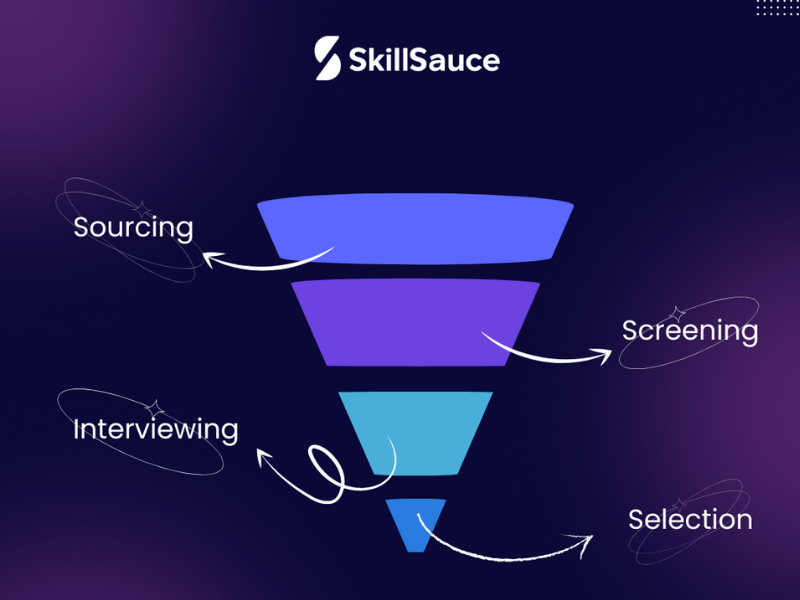
The DDH framework integrates analytics at every touchpoint, transforming reactive steps into predictive models.
Stage 1: Sourcing & Talent Mapping (Where to Look)
- Data Action: AI sourcing tools analyze external market demand, competitor talent movements, and internal churn data.
- Outcome: Recruiters shift from searching passively to engaging high-probability candidates before competitors can, building predictive talent pools.
Stage 2: Objective Screening & Assessment (Who Can Perform)
- The Critical Shift: DDH moves away from resume keywords and focuses on verifiable skills.
- Data Action: Integrated assessment platforms (like SkillSauce) use pre-hire coding tests, work-sample challenges, and psychometric scores.
- Outcome:Skill Scores replace resume scores. This objective data predicts technical competence and role-specific alignment, leading to a massive reduction in unqualified interviews.
Stage 3: Structured Interviewing (How Well They Fit)
- Data Action: Standardization. AI-driven interview tools and smart scorecards ensure every candidate faces the same structured questions, and every interviewer tracks to a consistent benchmark.
- Outcome:Bias Reduction. Interview scores are validated against established internal performance data, ensuring consistency and tracking interviewer effectiveness over time.
Stage 4: Predictive Selection & Onboarding (Will They Stay)
- The Final Step: Data from Stages 2 and 3 flow into a predictive model.
- Data Action: The model forecasts a candidate's probability of success, retention, and cultural alignment (beyond simple personality tests).
- Outcome:Hiring ROI. HR can directly connect pre-hire data to post-hire performance, proving the financial return on every recruiting decision.
4. The DDH Toolkit: Essential Metrics and Platforms
To execute DDH, recruiting teams need systems that seamlessly convert raw data into actionable intelligence.
Top 5 Key Performance Indicators (KPIs) for DDH
The Role of SkillSauce in the DDH Ecosystem
SkillSauce provides the integrated analytics engine that connects all these metrics. We centralize skill assessments, interview data, and predictive models into a unified dashboard, enabling recruiters to move instantly from data point to strategic decision.
5. Practical Implementation Framework: Getting Started with DDH
Implementing a DDH framework requires clear steps, not just new software. Follow this five-step action plan:
Step 1: Define Your North Star Metric (QoH)
Do not start by tracking 20 metrics. Define Quality-of-Hire (QoH) first. Is it performance rating after 6 months? Is it project completion success? Use this benchmark to define success.
Step 2: Centralize and Structure All Data
Move all applications, assessment results, interview feedback, and performance data into a single, cloud-based platform (ATS/HRIS). Fragmented data kills DDH.
Step 3: Implement Objective Assessments Pre-Interview
Use technical and psychometric assessments early in the funnel. This provides the crucial predictive data needed to justify subsequent expensive human decisions.
Step 4: Standardize the Interview Scorecard
Use insights from your top performers (Step 1) to build structured scorecards. Ensure interviewers are trained on consistent evaluation criteria, reducing bias and improving Interviewer Score Consistency.
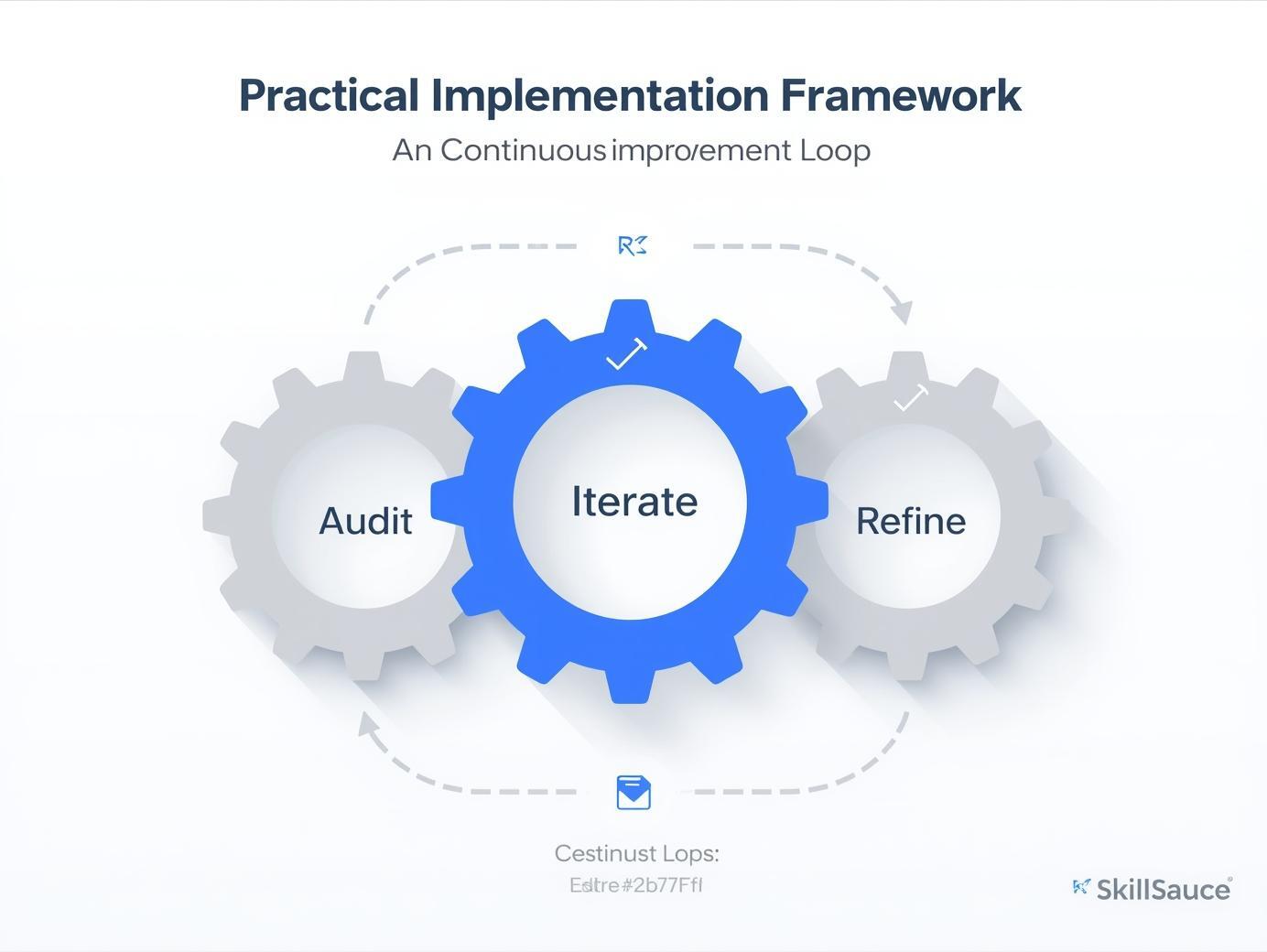
Step 5: Audit, Iterate, and Close the Loop
Quarterly, audit your TTH bottlenecks and compare your assessment scores against actual QoH metrics. This continuous iteration turns your hiring process from a function into a powerful, self-improving machine.
6. Conclusion: From Reactive Hiring to Predictive Talent Strategy
Data-driven hiring is the definitive competitive edge in the 2025 talent market. It’s a complete shift in philosophy: Analytics doesn't replace the recruiter; it empowers the recruiter to be a strategic, evidence-based leader.
By adopting a structured DDH framework and leveraging predictive assessment technology, organizations can eliminate costly mis-hires, build more diverse teams, and achieve proven, long-term returns on their talent investment.
The formula for modern success is clear: Insights drive outcomes.
Ready to build a truly data-driven team? Explore SkillSauce's integrated assessment and analytics engine today.