


Python ranks among the top programming languages for python developer hire. Its readability, versatility, and active online community make it stand out. This powerful language drives web applications and data analysis projects in businesses of all sizes.
But hiring the right talent can be tricky. Many startups failed because they chose inexperienced developers. A full-time Python developer in the US commands $99,712-$100,040 yearly. Your project's success depends on a well-laid-out plan to hire python programmers.
You might need a python programmer for a quick project or want a dedicated python developer to join your team long-term. This piece guides you through each step. You'll learn everything about a Python developer's role, ways to evaluate candidates, and different hiring models that work best.
Want to build your dream tech team? Let's explore how you can bring Python developer talent that delivers amazing results.
Understand the Role of a Python Developer

Image Source: BairesDev
A skilled developer stands behind every robust application. You need to understand a Python programmer's exact role to find the right match for your project.
What does a Python developer do?
Python developers are specialized programmers who use Python to build, test, and maintain software applications. Their core responsibilities include several vital areas:
- Writing clean, efficient, and scalable Python code
- Developing back-end components and server-side logic
- Integrating user-facing elements into applications
- Debugging programs and fixing issues
- Implementing security and data protection solutions
- Connecting applications with third-party web services
Python developers cooperate with cross-functional teams to understand user requirements and provide technical solutions. They evaluate feature requests, prioritize development tasks, and arrange applications with business goals. These professionals also keep track of data flow between servers and users to ensure smooth operations throughout the application lifecycle.
Common use cases and project types
Python's versatility makes it suitable for many applications in different industries. Here are some common project types to consider when you want to hire Python programmers:
- Web Development: Python developers build responsive web applications using frameworks like Django, Flask, or Pyramid. Major platforms including Instagram, Pinterest, and YouTube depend on Python's web capabilities to support millions of users.
- Data Science and Analysis: Python excels in data cleaning, preparation, and analysis through libraries like Pandas, NumPy, and Matplotlib. Companies like Spotify utilize Python for analytical insights and personalization algorithms.
- Artificial Intelligence & Machine Learning: Frameworks such as TensorFlow, PyTorch, and Scikit-learn enable Python developers to create sophisticated AI solutions. Netflix uses Python to build large-scale ML models for demand prediction and streaming optimization.
- Automation & DevOps: Python helps automate repetitive tasks, create workflows, and manage deployment processes.
- Financial Technology: Leading finance institutions like Citigroup and JP Morgan Chase use Python for training data analysts and developing trading-specific algorithms.
Python also powers desktop applications, game development, web scraping tools, and Internet of Things (IoT) applications. This makes Python programmers valuable assets for various technical needs.
When to hire a Python programmer
The right timing to hire Python developer talent can shape your project's success. You should bring a Python developer onboard in these specific scenarios:
- Implementing Deep Learning Models: Projects with complex neural networks for image recognition, speech processing, or natural language understanding need a Python developer who knows TensorFlow or PyTorch.
- Building Business Intelligence Tools: Your company's data-powered decision making needs Python developers skilled in data processing libraries to develop effective data pipelines and analytical models.
- Developing Autonomous Systems: Projects with robotics or self-driving technologies need Python programmers who can work on complex algorithms and real-time decision-making systems.
- Enhancing Natural Language Processing: Applications with chatbots, sentiment analysis, or language translation require Python developers experienced with NLTK or spaCy libraries.
- Scaling Web Applications: Python's robust frameworks provide the necessary infrastructure for platforms that handle millions of users.
IT staff augmentation offers a flexible way to use specialized Python talent for specific project needs. This approach works well for startups or companies that have changing development requirements.
Companies looking to hire Python developer India or global talent should focus on finding programmers with both technical Python expertise and relevant project experience that matches their specific business goals.
Identify the Skills You Need
Finding the right Python developer starts with knowing what skills really matter. You'll get better hiring results when you know which technical and soft skills to review in candidates for python developer hire.
Core Python and object-oriented programming
Python developers need strong fundamentals in core Python concepts. They should be good at:
- Data structures and types: Lists, dictionaries, tuples, and sets to organize and manage data efficiently
- Control flow: Loops, conditionals, and functions for logical programming
- Exception handling: Managing errors smoothly in applications
- File handling: Reading, writing, and working with files
Object-oriented programming (OOP) skills are significant to create maintainable code. Strong OOP skills help developers design modular programs that perform well and scale easily. Your candidates should know the four key OOP concepts: encapsulation, inheritance, abstraction, and polymorphism.
Advanced Python concepts become more important as experience grows. Mid-level developers should know decorators, generators, and parallelism. Senior developers typically excel at metaprogramming and optimization techniques.
Familiarity with frameworks like Django or Flask
Web frameworks are the foundations of Python-based web development. Your python programmers should know at least one major framework well.
Django comes packed with tools for database integration, authentication, admin panels, and more. This makes it perfect for large applications that need minimal starter code. Flask offers a lighter, more flexible option that works great for smaller projects or microservices where developers want more control.
Senior developers should know both how to use these frameworks and when each one works best. This architectural knowledge sets experienced developers apart from those who just know the technical basics.
Front-end and database knowledge
Python developers who understand front-end technologies bring extra value. This knowledge helps them:
- Create better front and back end connections
- Work better with UI/UX specialists
- Build more user-friendly APIs
- Fix interface issues faster
Look for candidates who know simple HTML, CSS, and JavaScript. Full-stack roles need deeper knowledge of front-end frameworks like React or Vue.js.
Database expertise is just as important for Python developers. They should have experience with SQL databases (PostgreSQL, MySQL) and possibly NoSQL options like MongoDB. Good database skills mean applications will handle data operations smoothly and quickly.
Soft skills: communication, time management, and teamwork
Technical skills alone won't guarantee success. As AI grows more important, soft skills have become key differentiators when you hire a python programmer.
Communication skills top the list of important soft skills. Great candidates can explain complex technical ideas clearly to different audiences. They share technical details with other developers while giving business-focused updates to stakeholders.
Time management and organizational skills make a big difference too. The best developers understand deadlines and consistently deliver on time. This becomes even more important for remote or distributed teams.
Team skills complete the soft skills package. Python developers often work in agile teams with designers, project managers, quality analysts, and other developers. Your candidates should show they can build relationships and work well toward team goals.
When you look at applications for python developer for hire positions, remember that the perfect mix of skills depends on your project needs. Junior roles might focus on technical basics, while senior positions need both advanced technical skills and strong soft skills.
Test and Evaluate Candidates Effectively

Image Source: Coding Game
Hiring talented developers takes more than just looking at resumes and doing regular interviews. You need a detailed assessment strategy to find the right python developer hire after identifying the required skills.
Use coding assessments and real-life tasks
A layered approach works best to see how candidates think, code, and tackle problems. You should build a tiered assessment funnel that tests candidates step by step instead of just giving them algorithm puzzles.
Python online tests help check basic programming skills and knowledge of standard libraries. These tests let you verify skill levels and make sure shortlisted candidates have what it takes.
Here are some practical ways to test candidates:
- Take-home projects: Give them projects that match real-life work. Candidates perform better when they use their own tools in a familiar setting
- Live coding sessions: Watch how they solve problems and write code as it happens
- Code review exercises: Let them find and fix bugs in code samples. This shows how well they understand and improve other people's work
The tests should mirror your team's actual challenges. This way, you'll know if candidates can use their technical skills to solve your business problems.
Evaluate knowledge of Python libraries
Knowledge of relevant libraries and frameworks matters a lot when you hire python programmers. The Python Libraries Skill Test helps you check if candidates know their way around Python's ecosystem.
Your assessment should cover three key areas: package management (pip, conda), standard library usage, and virtual environment setup (venv, virtualenv). These basic skills help developers use Python's features without extra libraries.
Candidates should also know specialized libraries that match your projects. Data science roles need Pandas, NumPy, and visualization tools like Matplotlib and Plotly. Web development positions require Django or Flask expertise.
Practical problems work better than theory questions. Ask candidates to use these libraries to solve real problems. This shows what they know and how they apply it—a vital difference when you hire a python programmer for specific needs.
Assess soft skills with behavioral tests
Technical skills alone won't cut it. Soft skills make a bigger difference now as teams become more cooperative and spread out. Include soft skills testing when you hire python developer India or worldwide.
Standard tests help review different soft skills quickly. We focused on problem-solving by giving candidates real challenges our team faced. Their solutions showed us how they handle complex problems.
Communication skills deserve extra attention. Let candidates explain technical concepts or show their past work during interviews. This reveals if they can explain things clearly to everyone.
Test adaptability by asking about times when project needs changed or they had to learn new tech faster. Their answers show how flexible they are and how well they learn—skills needed in today's digital world.
Team exercises show how well candidates work with others. You'll see how they interact, listen, and cooperate. Time management tests tell you if they can handle deadlines and priorities, which projects need to succeed.
This detailed evaluation helps you find python developer for hire candidates who bring both technical skills and people skills to your team.
Conduct Structured Interviews
The python developer hire process reaches a significant checkpoint during interviews. Technical screening and skills tests lead to structured conversations that reveal deeper insights about candidates' skills and team compatibility.
Sample questions for junior and senior developers
Questions should match experience levels to uncover both technical knowledge and practical skills. Junior Python developer interviews should focus on basic concepts:
- "Explain the difference between lists and tuples in Python"
- "How would you implement a binary search algorithm?"
- "Discuss the differences between shallow and deep copy"
- "Describe Python decorators and provide an example"
Senior role interviews need questions about advanced technical skills and system design:
- "How would you approach debugging a Python application running slower than expected?"
- "Explain your experience implementing RESTful APIs using Flask or Django"
- "Describe a situation where you debugged a complex issue in a Python application"
- "How would you design a system like a URL shortener or social media feed?"
Questions about past projects help candidates showcase their real-life experience. This reveals both problem-solving approaches and communication abilities.
How to assess problem-solving and debugging skills
Exceptional developers stand out through their problem-solving abilities. Watch how candidates break complex problems into manageable pieces throughout the interview.
Start by presenting a real-life problem your team has faced. A candidate's approach tells more about their thinking than the actual solution. Key areas to watch include:
- Root cause identification methods
- Systematic troubleshooting approach
- Multiple solution proposals
- Trade-off analysis between different approaches
Ask candidates to explain their strategy for handling unexpected exceptions during debugging assessments. Strong candidates usually describe understanding error messages, locating issues, and using systematic debugging methods.
Shared problem-solving sessions provide realistic assessment opportunities. Working together on a take-home project or small feature implementation [link_2] creates actual workplace scenarios. This shows their thought process and communication skills in realistic conditions.
Evaluating cultural and team fit
A hire python programmers success depends heavily on cultural fit alongside technical skills. Cultural assessment needs structure beyond gut feelings.
Create standard questions that reflect your company's values and environment. Previous team experiences, conflict resolution, and collaboration styles reveal compatibility with your organization's communication and work style.
Team members from different departments should participate in interviews to get varied viewpoints on fit. This ensures candidates work well with different personalities while reducing personal bias.
Communication skills matter greatly when you hire a python programmer. Candidates should explain complex technical concepts simply, similar to interactions with non-technical stakeholders. The best collaborative developers excel at translating technical details into business terms.
Behavioral questions about requirement changes or learning new technologies show adaptability. These scenarios highlight flexibility and resilience - vital traits in fast-paced tech environments.
A standard scorecard with clear criteria helps assess each interview stage. This maintains consistent evaluation across candidates while focusing on objective measures from technical tests and collaborative sessions rather than gut feelings.
Cultural fit works both ways. Candidates assess your company too, making honest communication about workplace culture, challenges, and opportunities essential. This mutual understanding leads to successful long-term python developer for hire relationships.
Choose the Right Hiring Model
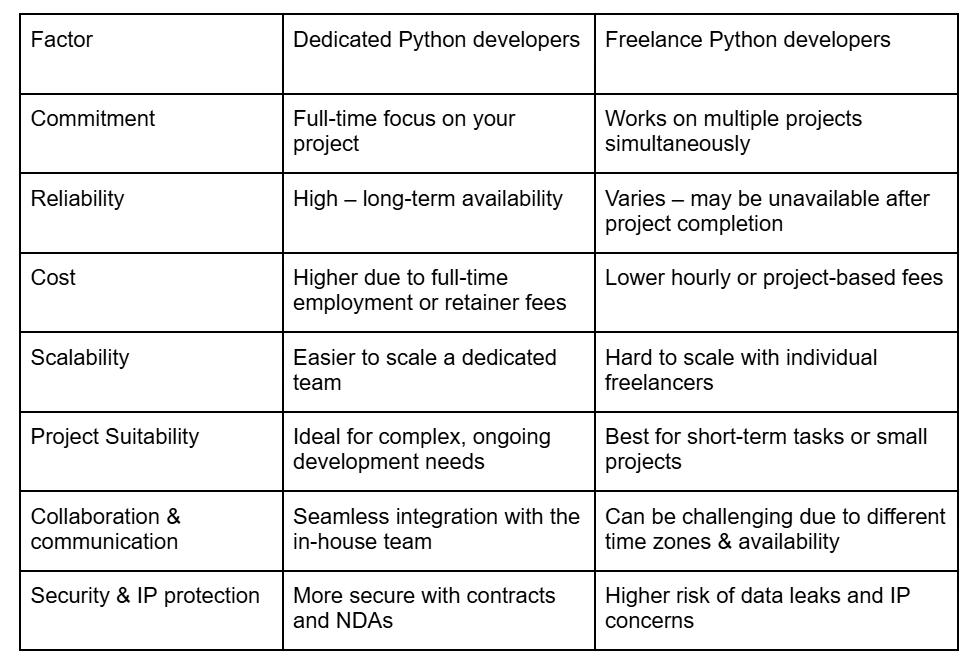
Image Source: Retail Technology Innovation Hub
Choosing the right hiring model is crucial when you recruit Python developers. Your project's scope, timeline, and budget will determine which option works best.
Freelancer vs full-time vs outsourcing
The freelance model brings flexibility and cost savings to short-term projects. Freelancers charge between INR 1265.71 to INR 2109.51 per hour. They excel at specific tasks that need specialized skills your team might lack. Notwithstanding that, freelancers might prioritize other clients, which affects long-term commitment.
Full-time Python developers integrate better with teams and stay consistently available. They require higher investment—annual salaries range from INR 843804.51 to INR 1265706.76. The stability they bring proves valuable for ongoing development needs and they fit better with your company's culture.
Outsourcing emerges as another option that lets you access experienced development teams without permanent hire costs. This approach can reduce development expenditure by up to 60%. It brings specialized expertise and speeds up time-to-market. Your specific project requirements should guide you among these options:
- Staff augmentation: Python developers join your existing team while partners handle administration
- Dedicated teams: Self-managed groups focus solely on your product with regular updates
- End-to-end development: Providers take full responsibility from discovery through deployment
Where to find Python developers
Many platforms connect businesses with qualified Python talent through different hiring models. Freelance marketplaces like Upwork and Freelancer provide access to broad talent pools with clear rating systems. Premium platforms like Toptal match businesses with pre-vetted senior developers within 48 hours.
LinkedIn proves invaluable for full-time recruitment with its advanced search filters for specific Python frameworks and libraries. Specialized recruitment agencies can manage the entire hiring process from sourcing through technical assessment.
Let SkillSauce Find Your Perfect Python Developer
SkillSauce's expertise can help you skip complex hiring decisions. We match businesses with pre-vetted Python talent that fits your technical requirements and team culture perfectly.
How to hire Python developer India or globally
Geographic diversity creates substantial cost advantages in Python recruitment. Indian developers deliver exceptional value. Their full-time annual salaries range between INR 843804.51–1265706.76, compared to approximately INR 8184819.35 in the United States.
Indian development teams excel at scalability and flexibility. Businesses can quickly adapt to changing project demands. Regional pricing varies significantly across the globe:
- North America: INR 6750.44–INR 15000 per hour
- Eastern Europe: INR 3375.22–INR 7000 per hour
- Asia (India, Vietnam): INR 1687.61–INR 5000 per hour
Remote work has become standard practice. Teams can now access global talent pools without location constraints. Successful remote collaboration depends on tools like Slack, Jira, GitHub, and Zoom.
Define Budget and Write a Clear Job Description
A realistic budget is crucial before you start recruiting for a python developer hire. You need to understand current market rates to stay competitive without overspending.
Typical salary ranges by region and experience
Location and experience level create substantial variations in compensation. Python developers in the United States earn between INR 6,843,085 and INR 10,480,051 annually. Senior developers at top companies like Meta can earn up to INR 14,850,959.
Indian Python developers earn between ₹4.5-12 LPA based on their experience. The average salary ranges from ₹3-5 LPA for junior developers, ₹8-15 LPA for mid-level developers, and ₹15-25 LPA for seniors.
Location within each country plays a key role. Developers in Bangalore and Delhi-NCR earn 21-26% more than their counterparts in other Indian cities. US developers based in New York earn approximately INR 13,399,615 yearly compared to INR 10,049,711 in Arizona.
What to include in a job description
Note that candidates usually spend just a few moments scanning job listings. Your description should include:
- Clear role overview and reporting structure
- Specific responsibilities (developing applications, debugging, integration with third-party services)
- Required technical qualifications (Python frameworks, database knowledge)
- Soft skills requirements (communication, problem-solving)
- Growth opportunities and company culture
Skip common mistakes like listing too many skills or using buzzwords like "rockstar" or "ninja." The focus should be on core competencies and real-life experience rather than academic qualifications.
Tips for attracting top Python developer for hire
Attracting elite talent goes beyond competitive pay. You should research market standards and create salary packages that match the candidate's skills.
The best talent looks for:
- Professional development opportunities and training programs
- Flexible work arrangements
- Performance-based incentives
- Clear project goals and vision
- Engaging company culture and values
Your visibility among qualified python developer for hire candidates can improve substantially through industry events and professional networks on GitHub and Stack Overflow. On top of that, employee referral programs are a great way to get pre-vetted talent.
Conclusion
The perfect Python developer brings both technical excellence and cultural alignment to your team. This piece walks you through the essential steps to find them - from understanding the role to writing job descriptions that catch top talent's eye.
Technical skills are the foundations of a great hire. Python expertise, framework knowledge, and problem-solving abilities make developers capable of building your critical applications. But soft skills like communication and teamwork often make the difference in a developer's long-term success with your team.
Your choice of hiring model shapes both project results and costs. Each option has its strengths based on your needs - freelancers bring flexibility, full-time developers offer deeper integration, and outsourcing partners provide scalability. Let SkillSauce find your perfect Python developer and skip the complex decisions - their pre-vetted talent pool naturally aligns with your technical needs and team culture.
Building your development team becomes more flexible with global hiring options. Teams from regions like India can deliver great value while meeting high quality standards. Job descriptions that pop and competitive pay packages are a great way to get qualified candidates.
Python developer hiring needs careful attention to detail. A smart assessment plan and structured interviews help you spot candidates who will excel in your environment. These recommendations will help you build a Python development team that turns your technical vision into reality.
Key Takeaways
Hiring the right Python developer requires a strategic approach that goes beyond technical skills assessment. Here are the essential insights for tech leaders looking to build successful development teams:
• Define your specific needs first: Understand whether you need web development, data science, AI/ML, or automation expertise before starting your search to target the right candidates.
• Balance technical and soft skills evaluation: Use coding assessments and real-world tasks to test Python proficiency, but equally prioritize communication, teamwork, and problem-solving abilities.
• Choose the right hiring model for your project: Consider freelancers for short-term tasks (₹1,265-₹2,109/hour), full-time developers for ongoing needs (₹8-15 LPA), or outsourcing for cost-effective scalability.
• Leverage global talent pools strategically: Indian Python developers offer exceptional value at ₹4.5-12 LPA compared to US rates of ₹68-104 LPA, without compromising quality.
• Structure your interview process systematically: Use tiered assessments, behavioral questions, and collaborative problem-solving sessions to evaluate both technical competence and cultural fit.
The key to successful Python developer hiring lies in understanding that technical expertise must align with your team dynamics and project requirements. Companies that implement structured evaluation processes while remaining open to global talent pools consistently build stronger development teams at optimal costs.