

Introduction
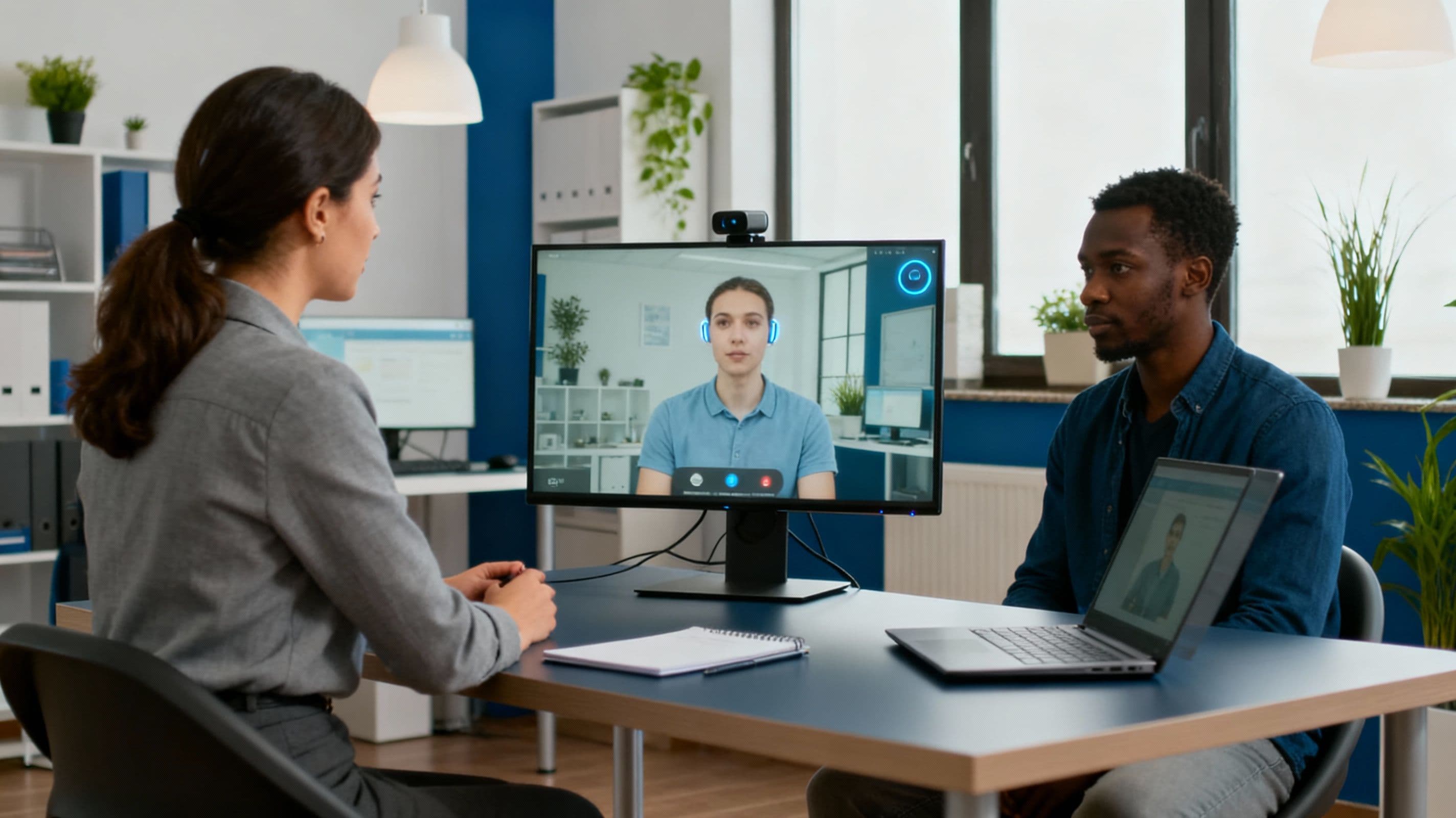
AI based interviews have rapidly evolved from experimental technology to an essential recruitment tool. According to recent industry research, 67% of organizations now use some form of AI in their recruitment process, representing a 189% increase from 2022 levels. The AI interview software market is projected to explode from USD 50 billion in 2024 to USD 279.48 billion by 2032, growing at a CAGR of 24%.
This seismic shift isn't happening by accident. Harvard Business Review research found that 97% of organizations using automated interviews report that the technology helps hire people more effectively, leading to quicker scheduling and reduced candidate drop-off. Meanwhile, SHRM's 2025 Talent Trends report reveals that 69% of HR professionals now use AI to support recruiting, up from 51% the year before.
But adoption alone doesn't guarantee success. The challenge lies in conducting AI based interviews strategically—leveraging technology's efficiency while maintaining fairness, transparency, and human judgment where it matters most.
What Are AI-Based Interviews?
AI based interviews leverage artificial intelligence technologies—including natural language processing (NLP), machine learning algorithms, video analysis, and predictive analytics—to automate and enhance candidate evaluation processes. Unlike traditional interviews requiring human interviewers for every interaction, AI systems can conduct, analyze, and score interviews at scale.
Types of AI-Based Interviews
- Asynchronous Video Interviews: Candidates record responses to pre-set questions on their own schedule. AI analyzes verbal content, vocal characteristics, and behavioral cues.
- Conversational AI Interviews: Interactive chatbots or voice assistants conduct real-time structured interviews, adapting questions based on candidate responses.
- AI-Powered Interview Analysis: Human interviewers conduct live interviews while AI systems transcribe conversations and score candidates against rubrics.
- Skills Assessment with AI Proctoring: Candidates complete technical assessments while AI monitors for cheating, validates identity, and scores objective components.
Benefits of Using AI-Based Interviews for Talent Identification
- Speed: Unilever reduced time-to-hire by 90%. Hilton reduced time-to-hire from six weeks to five days. Google cut manual screening time by 50%.
- Accuracy: AI matching accuracy rates reach 89-94%. AI-screened candidates had 53% success in human interviews (vs. 28% for resume-screened).
- Bias Reduction: AI reduced hiring bias by 56-61% for adopters. Diversity hiring increased 16% for Unilever.
- Candidate Experience: 73% appreciate faster processing. 68% value immediate feedback. 64% prefer AI-driven scheduling; asynchronous timing is flexible.
- Scalability: Unilever processed 250,000 applications, hiring 800 using AI interviews.
- Cost Savings: Unilever saved £1M+ and 50,000 hours in 18 months; IBM saw 30% lower costs.
How AI-Based Interviews Identify High-Performing Candidates
- Skills Analysis: AI objectively assesses technical and soft skills using keyword analysis, concept mapping, depth assessment, and behavioral indicators.
- Behavioral Pattern Recognition: Machine learning finds patterns in response structure, specific phrases, problem-solving, and accountability language.
- Standardized Scoring: AI uses rubrics for responses, weighted by competency. Consistent application ensures fair scoring for all candidates.
- Consistency Checks: AI cross-references resume claims and interview responses, detects rehearsed or inauthentic answers, and flags knowledge gaps.
- Predictive Analytics: AI predicts performance, retention, and culture fit using historical data and correlation tracking.
Step-by-Step Guide to Conducting AI-Based Interviews
- Define Role Competencies: Create competency frameworks by interviewing top performers and weighting core skills by importance.
- Choose an AI Interview Tool: Evaluate tools for functionality, bias mitigation, compliance, and integration with existing systems.
- Create Structured Interview Questions: Align questions with competencies, use open-ended behavioral prompts, standardize across all candidates.
- Enable Fairness Audits: Use adverse impact analysis and monthly audits to detect bias; take corrective actions as needed.
- Pilot Test: Run AI interviews in parallel with traditional methods; adjust based on candidate experience and performance data.
- Roll Out at Scale: Communicate transparently, train recruiters, support candidates, and monitor campaign performance.
- Evaluate & Iterate: Use KPIs (time, cost, quality, diversity), track performance/review outcomes, continuously improve processes.
- Maintain Human Oversight: AI should narrow the pool, but humans make final decisions, ensure cultural fit, and maintain strategic judgment.
Common Mistakes to Avoid
- Over-relying on Automation: Treating AI as infallible can miss high-potential candidates. Always include human review.
- Poor Dataset Training: Biased historical data leads to biased hiring results. Audit and diversify training sets.
- Lack of Transparency: Not explaining AI evaluation criteria erodes trust. Disclose AI use and process to candidates.
- Not Validating Results: AI must be validated against job performance continually. Track and adjust as needed.
- Not Aligning Interviews with Competencies: Avoid generic questions by mapping prompts to specific job-related skills.
Ensuring Ethical, Fair, and Bias-Free AI Interviews
- EEOC Guidelines: Monitor for disparate impact, validate tools, adhere to the four-fifths rule.
- GDPR Compliance: Enforce data minimization, explainability, right to human review, and retention limits.
- NYC Law 144: Annual audits, public posting, transparency disclosures.
- EU AI Act: Human oversight, risk management, robust documentation.
- Ethical Best Practices: Inclusive design, bias monitoring, transparent procedures, vendor due diligence.
Best AI Interview Tools to Use
AI Interview Tools: Feature Comparison
Evaluating solutions for predictive hiring, bias mitigation, and seamless integration.
| Tool | Type | Best For | Pricing Tier | Bias Mitigation | Integration |
|---|---|---|---|---|---|
| SkillSauce | Advanced AI Interviews (TESSA AI): Conversational, highly efficient, and skill-focused. Learn about TESSA AI | Holistic Hiring, Maximizing Predictive Validity Across All Roles | Low | Excellent (Built-in consistency, proactive bias reduction, audit-backed) | Excellent (Seamless ATS Sync) |
| HireVue | Asynchronous video | Enterprise, high-volume | High | Strong (removed facial) | Excellent |
| Paradox | Conversational AI chatbot | Hourly workforce, 24/7 | Medium | Good (text-based) | Good |
| Pymetrics | Gamified assessments | Entry-level, diversity | Low | Excellent (audits) | Moderate |
| Modern Hire | Video + assessments | Professional roles | High | Strong (I-O backed) | Good |
| Interviewer.AI | Video interviews | SMBs, international | Low | Basic | Basic |
Data based on publicly available information and typical market positioning as of late 2025.
Case Studies of Successful AI Interview Implementation
- Unilever: 90% faster hiring, £1M+ saved, 16% more diversity
- IBM: 70% effectiveness improvement, 30% turnover reduction
- Hilton: 85% time reduction, better retention
- Siemens: 60% less manual screening, improved candidate experience
- Google: 50% faster screening, 30% better culture fit
Future Trends in AI-Based Interviews
- Multimodal AI Analysis: Combine video, audio, and written cues for holistic assessment.
- Psycholinguistic Analysis: Use language structure and style to predict performance and fit.
- Competency-Based AI Scoring: Deeper skill analysis via scenario-based prompts.
- Behavioral AI: Match for team culture, not just skills.
- Predicting Job Success: Using AI to forecast performance and retention.
Conclusion
AI based interviews are now mainstream, with 67% of organizations using them and massive time/cost savings. The winning formula is strategic implementation, ethical oversight, continuous validation, transparency, and hybrid human-AI decision making.
Quick Reference Tables
| Pros | Supporting Data | Cons | Mitigation Strategy |
|---|---|---|---|
| Speed (75–90% faster) | Unilever, Hilton, Google | Trust gap (26% trust AI) | Transparency + human review |
| Accuracy (89–94% match) | Industry research | Bias risk (bad data) | Regular bias audits |
| Cost Savings (30–40% reduction) | IBM, Unilever, WEF study | Impersonal experience | Hybrid model |
| Bias Reduction (56–61%) | Unilever, IBM, Google | Accessibility/tech barriers | Accommodations |
| Scalability (1000s at once) | Unilever | Black-box explainability | XAI, vendor transparency |
| Consistency (equal for all) | All studies | Compliance complexity | HR/legal collaboration |
| Step | Key Actions | Timeline | Success Metric |
|---|---|---|---|
| Define | Interview performers, build competencies | 2–4 weeks | Clear rubric approved |
| Choose | Evaluate bias, compliance | 4–6 weeks | Tool matches needs & budget |
| Create | Make open, mapped questions | 1–2 weeks | Each maps to a skill |
| Audit | Enable fairness & impact monitoring | 1 week | Dashboards live |
| Pilot | Run 50–100 tests, parallel to manual | 4–8 weeks | Correlate results |
| Rollout | Train staff, support candidates | 2 weeks | >70% satisfaction |
| Evaluate | Track KPIs (hire time, cost, diversity) | Quarterly | No adverse impact |
| Oversight | Humans review finalists | Ongoing | Approval on each hire |
Ready to Implement AI-Based Interviews?
Join 67% of organizations hiring smarter with AI.
Schedule Your Demo