


How Early-Stage Startups Can Attract Top Developers
Introduction
Hiring the right developers is one of the biggest challenges for early-stage startups. With 85 million open tech roles projected by 2030, small companies face a tough battle against big tech firms offering high salaries and stability. Yet, startups can win top talent through smart recruiting strategies, skill-based hiring, and strong employer branding.
The Challenges of Startup Developer Recruitment
Before you can win, you have to understand the battlefield. Early-stage startups face unique and persistent obstacles in developer recruitment:
- The Talent Scarcity Crisis: The global shortage of skilled developers means fierce competition for a limited pool of talent.
- Salary Inflation: Tech salaries are rising 15-20% annually in major hubs, making it nearly impossible for most startups to compete on compensation alone.
- Brand Invisibility: Without a recognized brand, startups struggle to attract passive candidates, who are not actively searching for jobs.
- Unreliable Candidates: Top-tier developers are often juggling multiple offers, leading to last-minute dropouts and ghosting.
- Limited Hiring Capacity: Early-stage teams typically lack a dedicated recruiter or a structured process, leading to inconsistent, time-consuming, and biased screening.
Best Practices for Attracting Developers
1. Equity & Mission Over Salary
Developers value meaningful equity and purpose-driven work. Clearly communicate your mission and impact.
2. Skill-Based Hiring
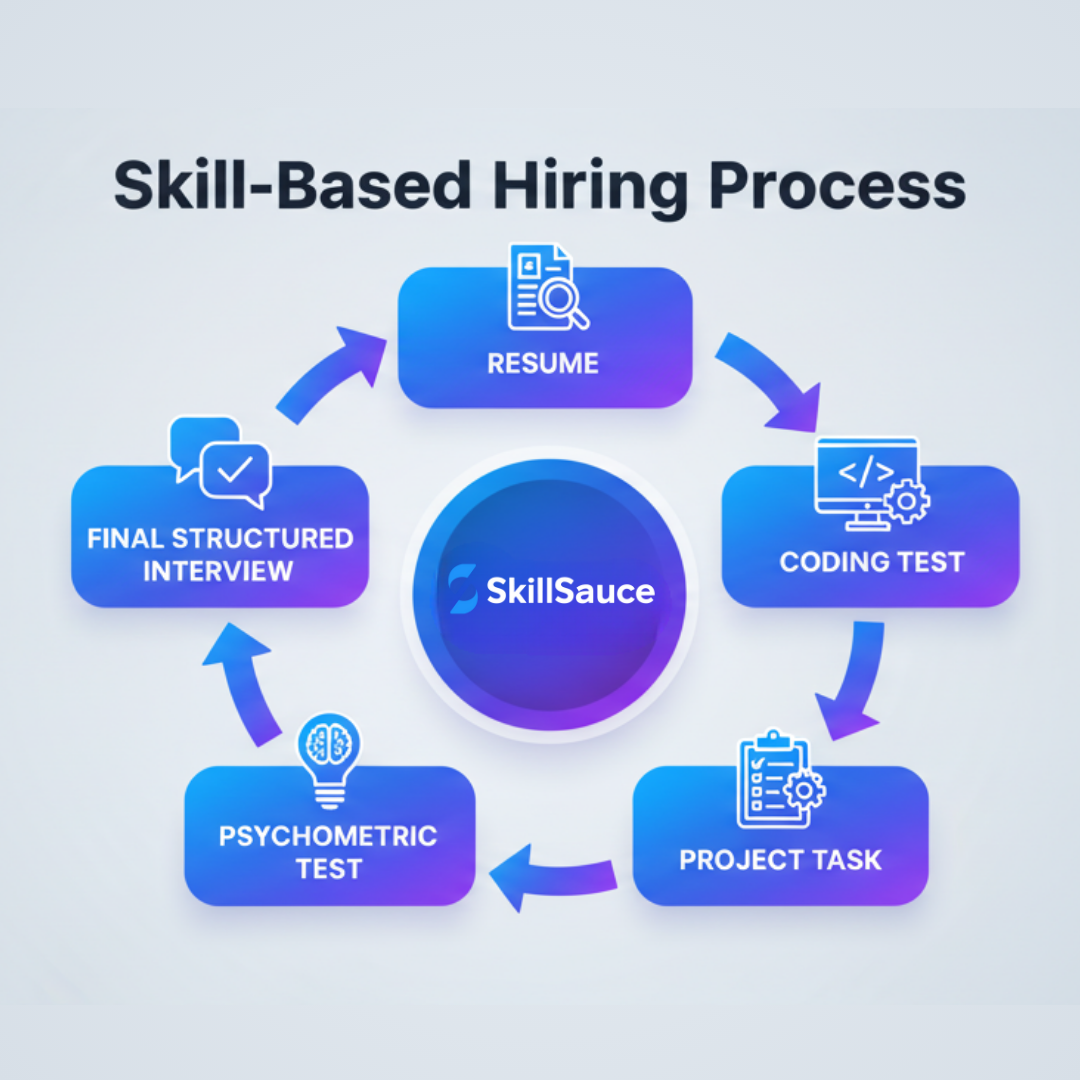
Skill based hiring process
Using platforms like SkillSauce helps startups screen candidates objectively with coding, aptitude, and psychometric tests—broadening the talent pool.
3. Remote-First Flexibility
According to Stack Overflow Developer Survey, over 85% of developers expect flexible work. Adopting remote-first policies expands reach globally.
4. Transparent, Fast Hiring Processes
Slow or unclear recruitment loses candidates. Startups should prioritize structured interviews, instant feedback, and quick decisions.
5. Growth & Autonomy
Highlight opportunities for engineers to lead projects, learn fast, and make real impact in a small team setting.
Skill-Based Hiring Approaches
- Validated coding assessments: HackerRank, Codility, SkillSauce.
- Project-based tasks: Simulate real-world startup projects.
- Psychometric & aptitude testing: Use tools like Mercer Mettl or SkillSauce’s Psychometric assessments.
- Structured interviews: Define scoring rubrics to reduce bias.
Employer Branding for Startups
- Showcase your challenges: Blog about real technical problems.
- Employee advocacy: Encourage early hires to share their stories.
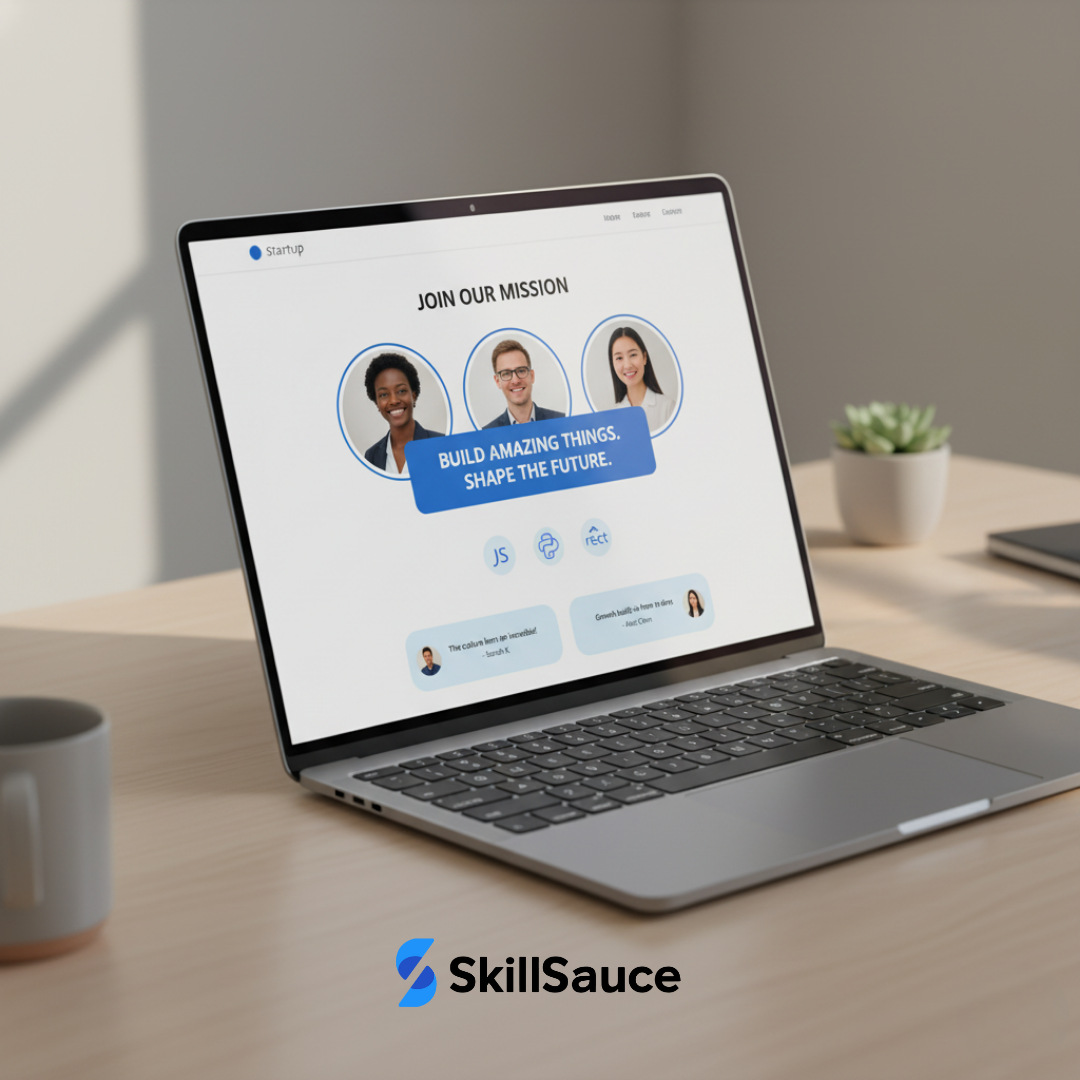
- Transparent career page: Add culture, stack, and testimonials (see SkillSauce Careers).
- Dev community engagement: Host webinars, AMAs, or hackathons.
Activating Developer Communities
- Be active on GitHub, Stack Overflow, and Indie Hackers.
- Share open documentation and coding challenges publicly.
- Join Discord/Slack groups where developers exchange jobs and referrals.
Startup Case Studies: Winning the Talent War
- Stripe: This payments giant built its brand by creating high-quality, developer-friendly APIs and sharing insightful technical content on its engineering blog. This community-first approach helped them attract top talent from day one.
- GitLab: As a pioneer of the remote-first model, GitLab scaled its engineering team globally by embracing flexibility. Their public-by-default culture (open-source documentation, transparent handbooks) made them a magnet for developers who value autonomy and transparency.
- Atlassian: Rather than competing on salary alone, Atlassian focused on engineering ownership and a culture of autonomy. This attracted talented developers who were more interested in impactful work than a higher paycheck.
Industry Benchmarks
- 85%+ developers expect remote/hybrid work.
- Startups using skill-based hiring fill roles 30% faster.
- Developers prioritize modern tech stacks, autonomy, and growth opportunities.
Conclusion
Early-stage startups don’t need to compete with FAANG-level salaries to win top developers. By adopting skill-based hiring, embracing a remote-first policy, and building a mission-driven employer brand, even small teams can attract and retain exceptional technical talent.
The future of startup hiring isn't about the biggest budget; it's about the smartest strategy. It's about focusing on skills, showing your mission, and making your developers feel like they're building something that truly matters.
Ready to attract your next great developer? Discover how SkillSauce can transform your hiring process with AI-driven assessments and a seamless platform tailored for startups.