


Introduction: The Make-or-Break Milestone
Hiring your first 10 engineers is often the hardest milestone for any startup. Every startup founder knows the feeling: the excitement of a new idea, the sleepless nights building a prototype, and then, the daunting challenge of hiring your very first engineers. It's often the hardest milestone to cross. You're competing with tech giants who can offer astronomical salaries and household brand names. Your budget is tight, and your brand recognition is non-existent. Making a single bad hire can not only drain your limited capital but also derail your product roadmap and poison your budding company culture.
This is where the old hiring playbook fails. Relying on resumes and prestigious degrees is no longer enough to win the war for talent. Instead, the most successful startups are turning to skills-based hiring. This isn't just a trend; it's a strategic necessity that prioritizes a candidate's actual abilities over their credentials. By focusing on what someone can do, you can build a stronger, more agile, and more diverse engineering team from the ground up.
Challenges Startups Face in Hiring Engineers

how to hire engineers
Before we explore the solution, let’s be honest about the obstacles you face. You're in a highly competitive market, and understanding your challenges is the first step to overcoming them.
- The Talent Scarcity Crisis: There are simply not enough engineers to fill all the open roles. According to a recent survey, over 74% of employers report difficulty filling technical positions, making every qualified candidate a valuable prize.
- Brand Invisibility: Big tech companies attract a steady stream of inbound talent simply by existing. Startups, on the other hand, must be proactive and innovative to get on a candidate's radar.
- The Salary Gap: You can't match Google's compensation packages. This forces you to lean on your company’s unique value proposition: the opportunity to have a massive impact, a dynamic culture, and significant equity. But even these advantages might not be enough for some candidates.
- The Unstructured Trap: Without a clear framework for screening and interviewing, your hiring process becomes inconsistent, biased, and inefficient. This leads to wasted time and, even worse, the risk of a bad hire that costs you thousands of dollars and months of productivity.
Why Skill-Based Hiring Works Best
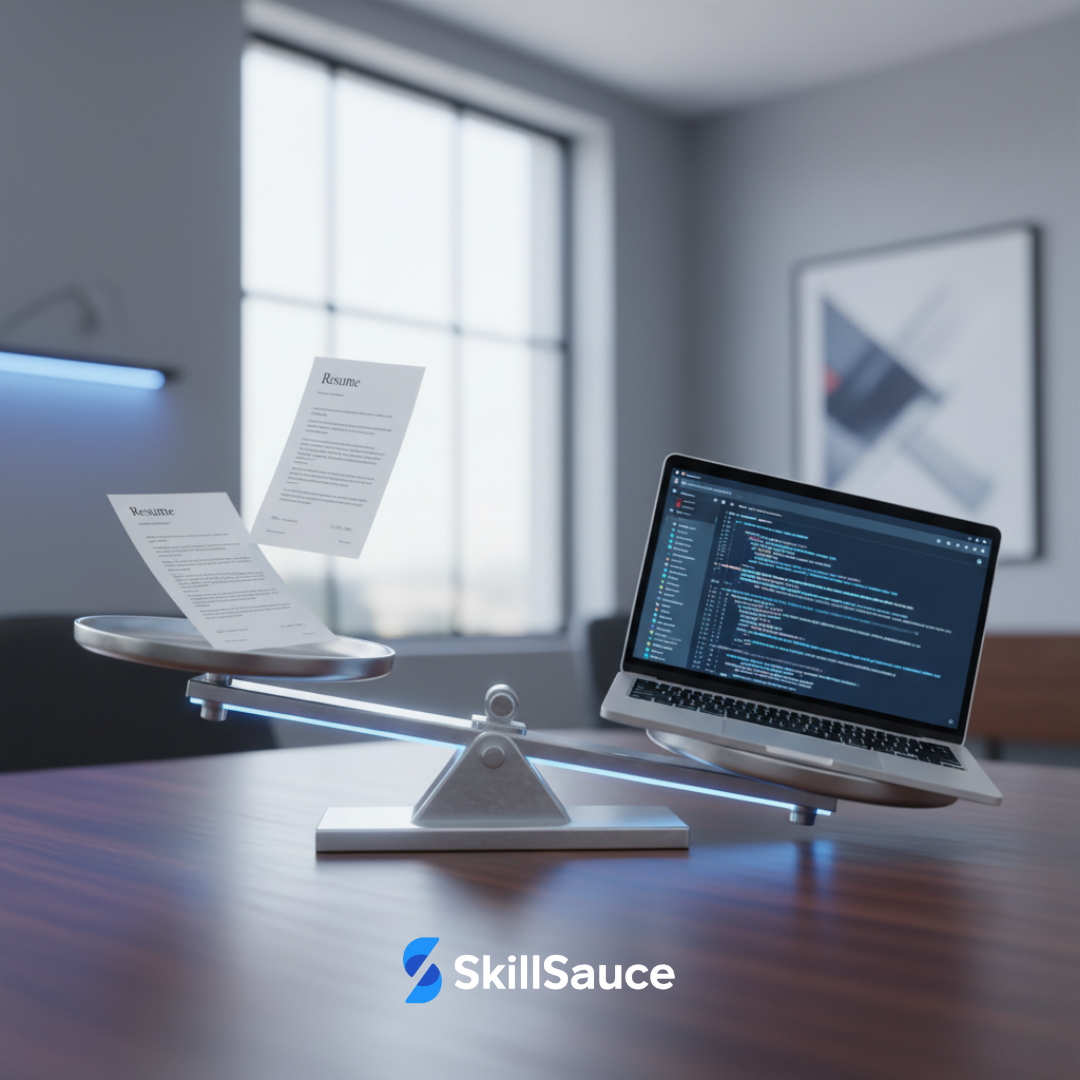
Skill-based hiring focuses on what candidates can actually do, not just what’s on their résumé.
- Broader talent pool: Companies see up to 16x more qualified candidates (LinkedIn).
- Lower cost-per-hire: Hiring costs drop by 30% (SHRM, 2023).
- Reduced turnover: Turnover lowers by 40% after switching to skills-first practices.
- Faster hiring: 91% of companies report faster recruitment cycles; some cut hiring time by 25% or more.
- Bias reduction: Structured assessments allow fair opportunities for nontraditional and international talent.
Best Practices to Hire Engineers Using Skill-Based Methods
Choosing the right technology can make all the difference. Here are some of the best platforms for skill-based hiring.
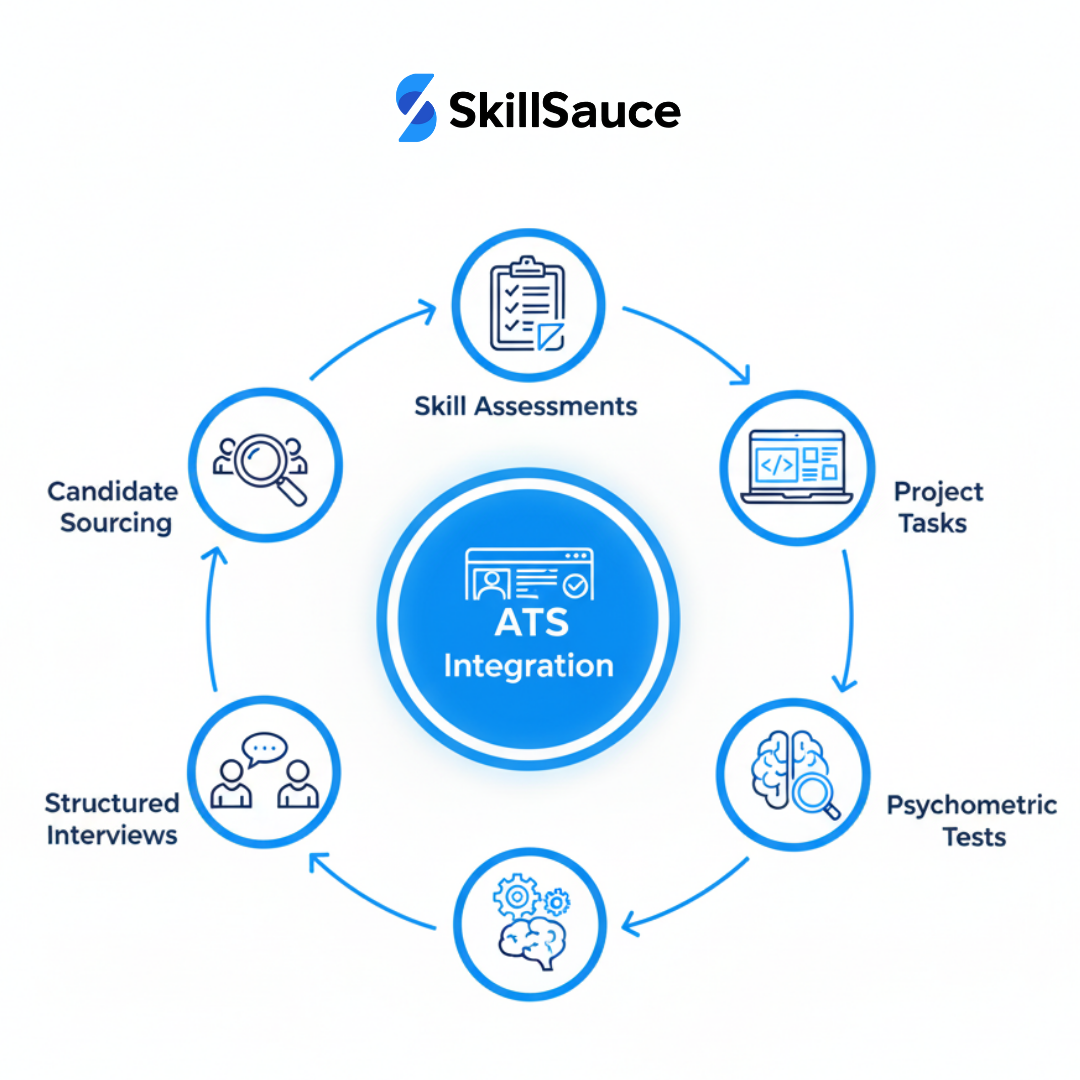
- SkillSauce ATS: An all-in-one platform designed for startups. It combines end-to-end applicant tracking with AI-driven assessments for coding, psychometric, and cognitive skills, allowing you to manage the entire process seamlessly.
- TestGorilla: Excellent for multi-skill testing and for roles that require a combination of technical and soft skills. It integrates well with various Applicant Tracking Systems (ATS).
- HackerRank / Codility: The industry standard for technical screening. These platforms offer a vast library of coding challenges and are essential for any tech-focused hiring.
- Lever / Greenhouse: These are robust Applicant Tracking Systems that serve as a central hub for all your hiring activities and can be integrated with various skill assessment tools.
| Platform | Focus Area | Best For |
|---|---|---|
| SkillSauce ATS | AI-driven assessments (aptitude, psychometric, coding) + end-to-end Applicant Tracking | Startups & HR teams needing one platform for both assessments & recruitment |
| HackerRank | Coding challenges, AI-driven reviews | Tech startups |
| Codility | Developer coding assessments | Mid-to-large engineering teams |
| TestGorilla | Multi-skill testing + ATS sync | Fast-scaling startups |
| Vervoe | Project/task simulations with AI scoring | Culture fit & teamwork |
| Mercer Mettl | Technical + psychometric testing | Balanced evaluations |
| Greenhouse | ATS with skill test plug-ins | Enterprise-scale startups |
| Lever | Collaborative ATS with assessments | Growth-stage companies |
Case Studies: Startups Scaling with Skills-First Hiring
- Atlassian: Adopted Vervoe for coding and teamwork tests → reduced time-to-hire and improved new-hire performance scores.
- Dropbox: Uses HackerRank’s AI-driven code reviews → streamlined screening and cut engineering manager workload.
- SaaS Startups: Early-stage teams saw 2x fewer failed hires when replacing informal interviews with coding + project-based evaluations.
how to hire engineers
Data-Driven Benchmarks
- 73% of employers use skill-based hiring practices (SHRM, 2023).
- Companies report 40% lower turnover and 30% lower cost-per-hire (SHRM).
- 88% of firms now use AI in screening (Gartner, 2023).
- Non-degree hires see a 10% higher retention rate.
Conclusion: Hire Smarter, Scale Faster
For a startup, your first ten engineers are not just employees; they are the architects of your company's future. They will define your product, your culture, and your speed to market. By making the switch to skills-based hiring, you are making a strategic decision to build a more resilient, innovative, and cost-effective team. You are moving beyond the noise of traditional credentials and focusing on what truly matters: proven ability.
Ready to transform your hiring process and find your A-team? Explore SkillSauce ATS to discover how AI-driven assessments can help your startup scale smarter, not just faster.