

Introduction
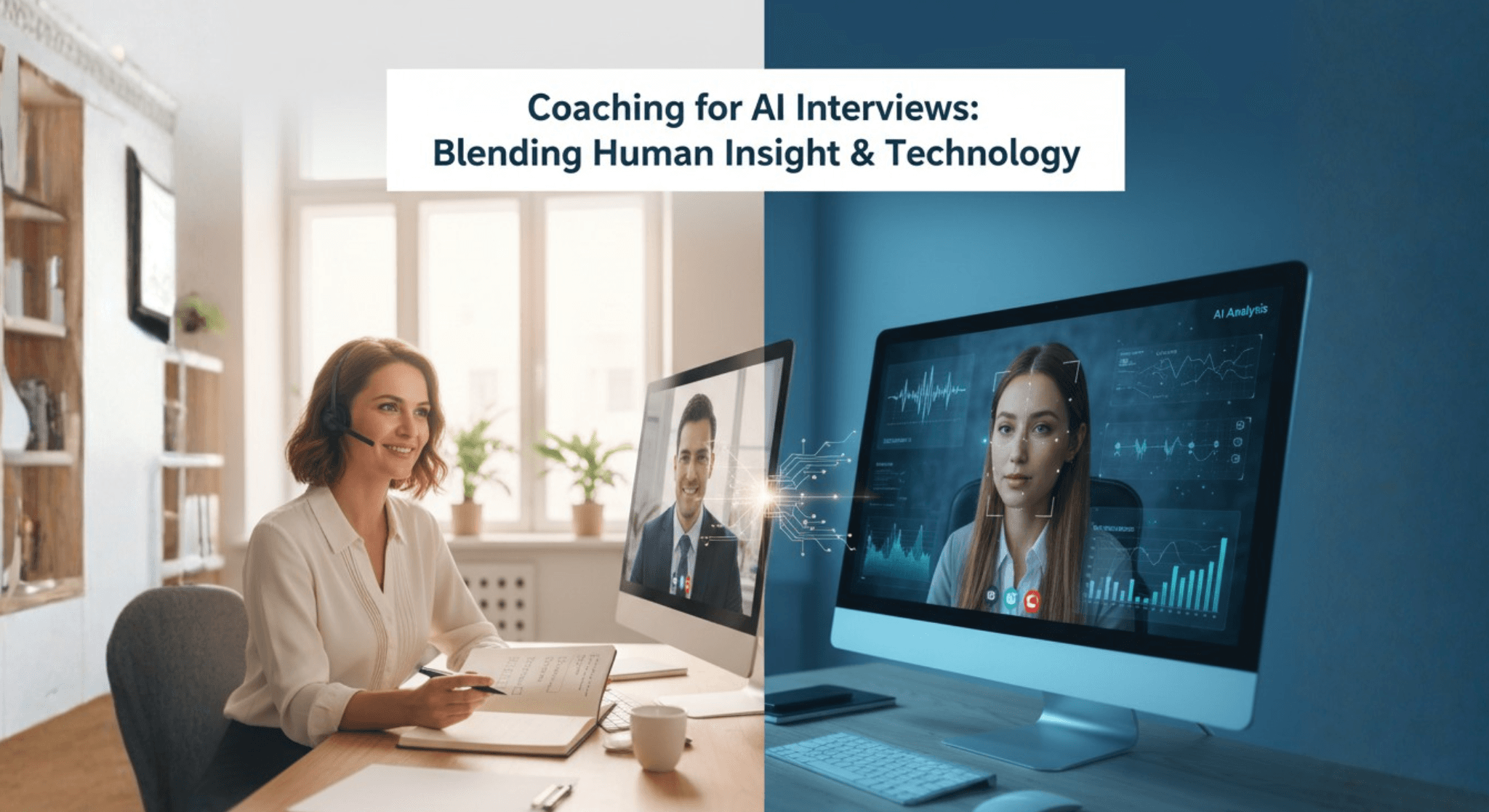
As artificial intelligence reshapes the hiring landscape, AI interview coaching has emerged as a vital tool for recruiters, HR professionals, and jobseekers alike. With companies increasingly adopting AI-powered interviews, traditional interview preparation is no longer enough.
Candidates must now learn to interact with systems that assess not only what they say—but how they say it. These tools use machine learning (ML) and natural language processing (NLP) to evaluate tone, structure, clarity, and behavioral cues.
To thrive in this new environment, organizations are turning to structured AI interview coaching programs—a blend of behavioral science, data analytics, and practical training—to ensure candidates perform confidently and fairly in digital interviews.
The Rise of AI Interviews
AI interviews were born out of necessity—to help companies screen thousands of candidates efficiently, without human bias or scheduling conflicts. Today, these interviews are used across industries, from tech and finance to retail and healthcare.
How They Work
AI interviews typically record candidates’ responses to standardized questions and use algorithms to assess:
- Speech content – word choice, grammar, and clarity
- Tone and pace – emotional range, confidence, and delivery speed
- Facial expressions (in video interviews) – engagement, positivity, and attentiveness
This data-driven approach offers consistency, scalability, and objectivity, allowing recruiters to focus on high-potential candidates quickly.
Benefits of AI Interviews
- Enables high-volume hiring without sacrificing quality
- Promotes unbiased evaluations by minimizing human subjectivity
- Generates data-rich insights for ongoing process improvement
However, despite these advantages, many candidates still feel anxious facing a “machine interviewer.” They may not know how to express themselves naturally or understand how they’re being assessed. This is where AI interview coaching becomes essential.
Why AI Interview Coaching Matters
AI interview coaching bridges the gap between human behavior and algorithmic evaluation. It ensures that candidates not only perform well but also understand the technology evaluating them.
Key Benefits of AI Interview Coaching
- Boosts Candidate Confidence: Understanding how AI interviews work reduces anxiety and improves comfort levels.
- Improves Fairness: Well-prepared candidates perform more consistently across various AI platforms.
- Enhances Hiring Outcomes: Recruiters receive better-quality responses, improving hiring accuracy.
- Creates Transparency: Coaching demystifies AI-driven evaluation, making the process feel fair and equitable.
Modern AI interview platforms like SkillSauce.io provide transparent, ethical systems designed to empower both recruiters and candidates through built-in feedback and fairness controls.
Explore SkillSauce.io’s AI Interview Platform for structured coaching and analytics.
Science-Backed Coaching Techniques for AI Interviews
AI interview coaching goes beyond memorizing answers—it involves a systematic understanding of psychology, communication, and data. Let’s explore proven techniques recruiters and coaches can use.
1. Simulated AI Mock Interviews
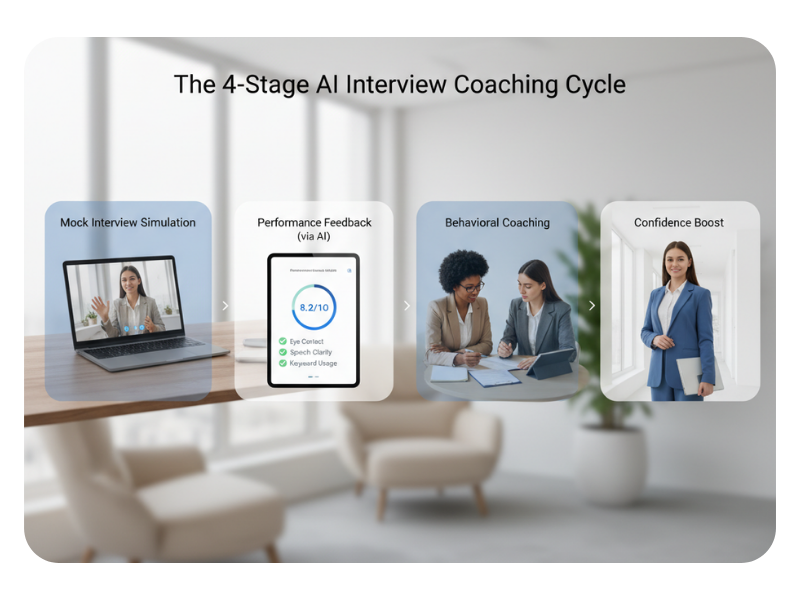
Using AI-powered mock interview tools allows candidates to experience real digital environments. They learn to manage timing, tone, and format, ensuring smoother real-world performance. Simulations can replicate industry-specific scenarios—from customer service situations to leadership assessments—making practice personalized and practical.
2. Feedback Loops Using AI Analytics
Modern coaching tools like SkillSauce.io provide real-time feedback on:
- Word choice and clarity
- Filler word usage
- Emotional tone
- Pace and fluency
These insights help candidates refine delivery and build measurable progress over time. The use of data-driven feedback transforms abstract advice into concrete improvement steps.
3. Behavioral and Situational Training
Effective AI interview coaching uses frameworks such as STAR (Situation, Task, Action, Result) to help candidates structure responses clearly. The STAR method allows AI systems to recognize logical flow and purposeful storytelling—key factors in scoring algorithms.
4. Video and Non-Verbal Guidance
AI tools increasingly assess visual cues such as facial expressions, posture, and gestures. Coaches can train candidates to:
- Maintain open body language
- Use consistent eye contact
- Avoid excessive movement or nervous tics
- Display calm confidence on camera
Non-verbal communication plays a major role in how AI systems interpret professionalism and engagement.
5. Psychology-Based Practice
Science shows that distributed practice—short, consistent sessions over time—produces better performance than last-minute cramming. AI interview coaching incorporates this principle by scheduling regular practice sessions that strengthen long-term confidence and memory recall.
6. Role-Specific Coaching
Not every role demands the same communication style. For example:
- Technical candidates should focus on clarity and logical flow.
- Leadership candidates should emphasize empathy, tone, and decision-making confidence.
AI interview coaching tailors guidance to these nuances, ensuring alignment with role expectations and organizational culture.
How Recruiters and HR Teams Can Implement AI Interview Coaching
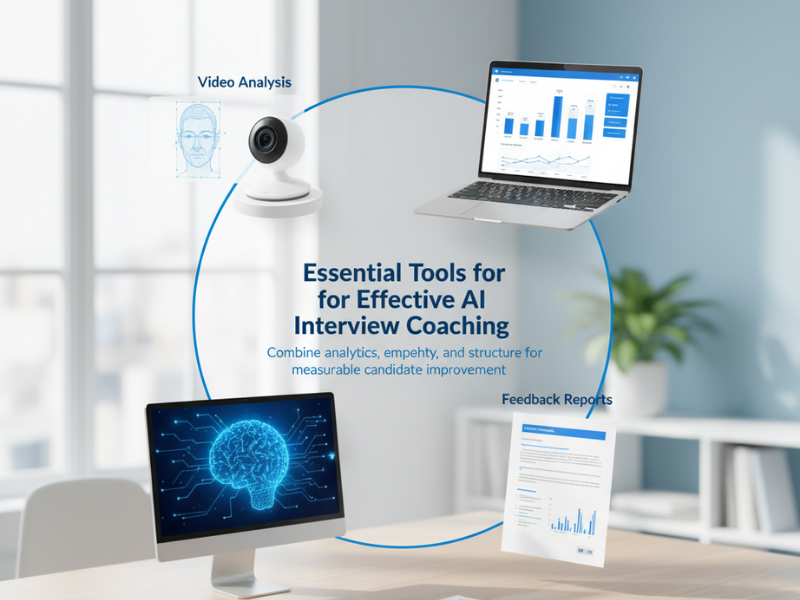
To make AI interview coaching part of your recruitment process, HR teams can follow a simple implementation roadmap.
Step 1: Assess Needs
Identify the roles and interview types your organization uses—video, asynchronous, or text-based—and evaluate where candidates face challenges.
Step 2: Select Tools
Choose scalable, data-driven AI interview platforms such as SkillSauce.io, which offer simulation, feedback analytics, and progress tracking.
Step 3: Design a Coaching Curriculum
Develop a training program that includes:
- STAR response techniques
- Time management and pacing
- Video presentation skills
- AI feedback interpretation
Step 4: Run Simulations
Host periodic mock interviews and review candidate performance data. Encourage peer discussion and self-review for continuous growth.
Step 5: Provide Analytics-Based Feedback
Offer detailed, actionable reports with improvement points for each candidate. Focus on specific, measurable progress, not just general feedback.
Step 6: Foster a Supportive Environment
Make AI interview coaching a safe, developmental process—encourage questions, share success stories, and normalize feedback loops.
Step 7: Track ROI
Use data to measure:
- Candidate improvement rate
- Interview performance metrics
- Hiring quality and retention outcomes
This ensures that coaching delivers tangible business results, not just training sessions.
Ethics and Fairness in AI Interview Coaching
Ethical use of AI in interviews is crucial. Coaching should never aim to “game” algorithms—it should prepare candidates to authentically represent themselves within AI systems.
Recruiters and trainers must ensure transparency about:
- What aspects of performance are analyzed
- How feedback is generated
- How data privacy is maintained
SkillSauce.io, for instance, emphasizes bias-free AI design and ethical data handling, promoting a fair and transparent candidate experience.
Conclusion
AI interview coaching is not just about preparing candidates—it’s about empowering them to succeed in an increasingly automated world.
By combining science-backed training techniques, AI-driven analytics, and continuous feedback, recruiters can help candidates thrive while ensuring fairness and consistency in hiring.
As AI continues to transform recruitment, organizations that invest in structured coaching programs will stand out for their efficiency, inclusivity, and candidate satisfaction.
Explore how SkillSauce.io can help you launch scalable, transparent AI interview coaching programs for your teams and candidates.